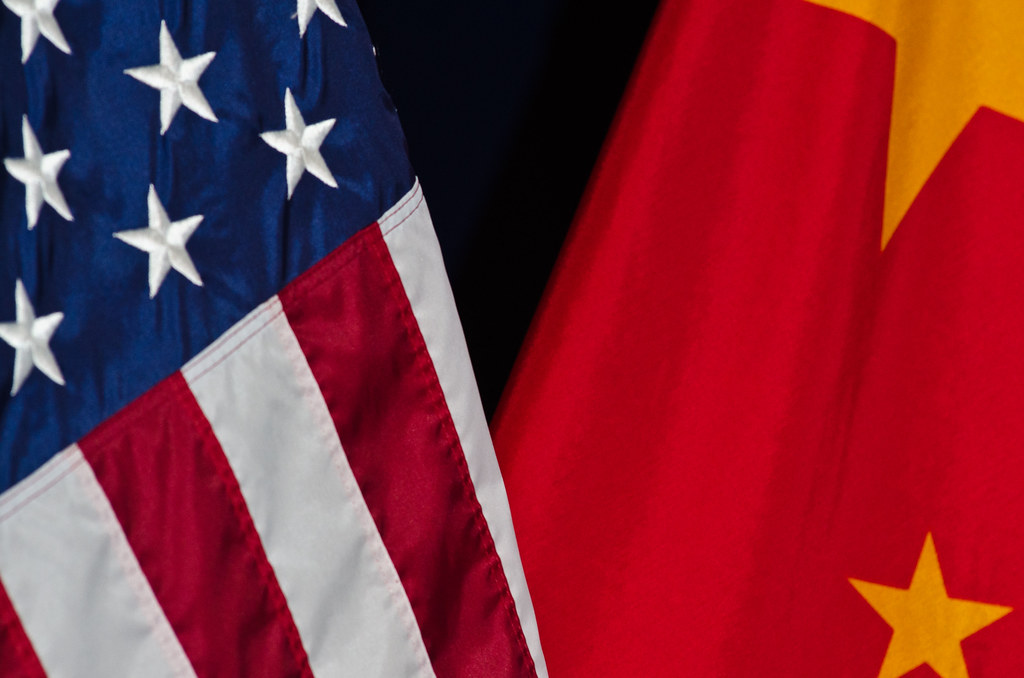
The United States and China are set to hold bilateral talks on artificial intelligence in September to address mutual security risks surrounding increasingly advanced frontier models, according to five sources familiar with the matter.
The discussions—a key takeaway from the May summit between President Donald Trump and President Xi Jinping—are expected to precede President Xi’s planned visit to the U.S. on September 24, though exact dates remain unconfirmed. Both nations are increasingly concerned over each other’s rapid AI progress and its potential to bolster military capabilities, launch cyberattacks on critical infrastructure, and disrupt labor markets.
According to four sources, U.S. Treasury Secretary Scott Bessent is expected to lead the American delegation. Other participants, specific agenda items, and the venue remain under deliberation as preparations are in early stages. U.S. and Chinese government agencies did not immediately respond to requests for comment.
When asked about the upcoming talks on Fox Business Network, Secretary Bessent did not explicitly confirm the meeting but raised sharp concerns regarding intellectual property, stating that U.S. large language model watermarks have been detected within Chinese models and emphasizing that models must adhere to consistent standards. Additionally, U.S. Trade Representative Jamieson Greer noted that multiple agencies are examining Chinese AI development practices, specifically concerning forced technology transfer, IP issues, and energy subsidies.
This meeting will mark the first official U.S.-China AI dialogue under the Trump administration. While Washington has previously restricted exports of high-end AI chips to China, it has refrained from adding major Chinese entities—such as startup DeepSeek and chipmaker CXMT—to trade blacklists to avoid escalating tensions. On the other side, Chinese officials are reportedly considering restrictions on overseas access to top Chinese AI models due to potential security risks posed by unreleased advanced models like Anthropic’s Mythos.
Analysts note that Beijing is seeking technical, substantive engagement rather than political rhetoric. Key priorities for China include discussing U.S. protocols for future model releases, potential restrictions on Chinese open-weight models, and capabilities of advanced systems like Mythos. Industry experts expect initial talks to focus on establishing baseline terms, such as defining what constitutes a frontier AI model, rather than immediately resolving complex geopolitical disputes.
Click here for more on Technology