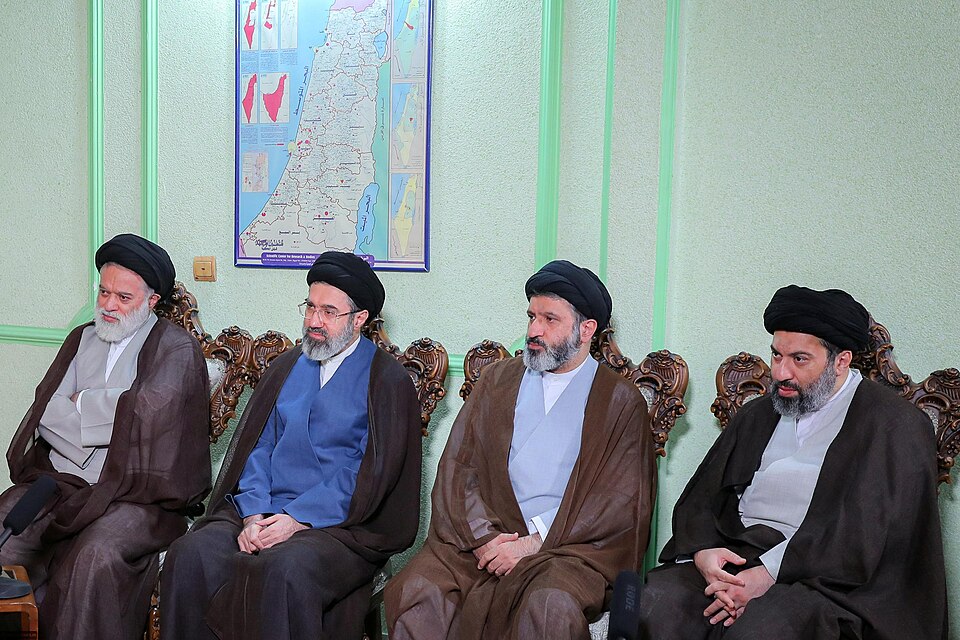
According to two senior Iranian sources, Supreme Leader Ayatollah Mojtaba Khamenei has issued a direct mandate prohibiting the transfer of Iran’s near-weapons-grade uranium outside the country. This directive significantly hardens Tehran’s negotiating posture, directly challenging a primary American and Israeli condition for a permanent peace settlement. The order risks further aggravating U.S. President Donald Trump, who recently reaffirmed that Washington will not permit Iran to maintain its highly enriched uranium stockpile, suggesting the U.S. would seize and likely destroy it. Israeli officials have similarly noted that President Trump previously assured Israel that any final peace accord would mandate the complete removal of this material from Iranian soil.
Western nations and Israel have long maintained that Iran’s decision to enrich uranium to 60% purity—far exceeding civilian requirements and edging closer to the 90% threshold required for a nuclear weapon—proves a military intent, an allegation Tehran denies. Israeli Prime Minister Benjamin Netanyahu has explicitly stated that the conflict will not conclude until Iran’s enriched uranium is extracted, its ballistic missile capabilities are dismantled, and its support for proxy networks ceases. Within the Iranian political establishment, there is a firm consensus that relinquishing the stockpile would leave the nation highly vulnerable to future American or Israeli military strikes. While White House spokeswoman Olivia Wales emphasized that President Trump remains unyielding on his strategic red lines, Iran’s foreign ministry declined to comment.
This diplomatic impasse unfolds during a fragile ceasefire that followed U.S.-Israeli strikes on Iran on February 28, which triggered retaliatory Iranian attacks on Gulf states hosting U.S. bases and sparked renewed fighting along the Israeli-Lebanese border. Peace negotiations, currently mediated by Pakistan, remain gridlocked due to a U.S. blockade on Iranian ports and Tehran’s continuous leverage over the Strait of Hormuz oil route. Senior Iranian officials harbor deep suspicions that the current lull in hostilities is a tactical deception by Washington to prepare for a secondary wave of airstrikes, a sentiment echoed by top Iranian negotiator Mohammad Baqer Qalibaf. Conversely, President Trump warned that the U.S. is prepared to resume military operations if a peace agreement is not reached soon.
While the two sides have reportedly narrowed differences on minor issues, fundamental divisions persist over Tehran’s nuclear ambitions and its demand for recognized enrichment rights. Before the outbreak of hostilities, Iran had indicated a willingness to export half of its 60% enriched stockpile, but sources state this position was reversed following repeated American threats. Despite the heightened rhetoric, Iranian insiders suggest compromise is still achievable through alternative technical formulas, such as down-blending the stockpile under International Atomic Energy Agency (IAEA) monitoring. The exact volume of surviving material remains uncertain following U.S. and Israeli strikes on Iranian nuclear sites in June 2025; however, IAEA Director General Rafael Grossi recently estimated that slightly over 200 kg of the remaining stock is secured within a protected tunnel complex in Isfahan, with additional quantities located at Natanz. Tehran continues to maintain that its enriched material is strictly designated for medical research and civilian reactor operations.
Click here for more on World News