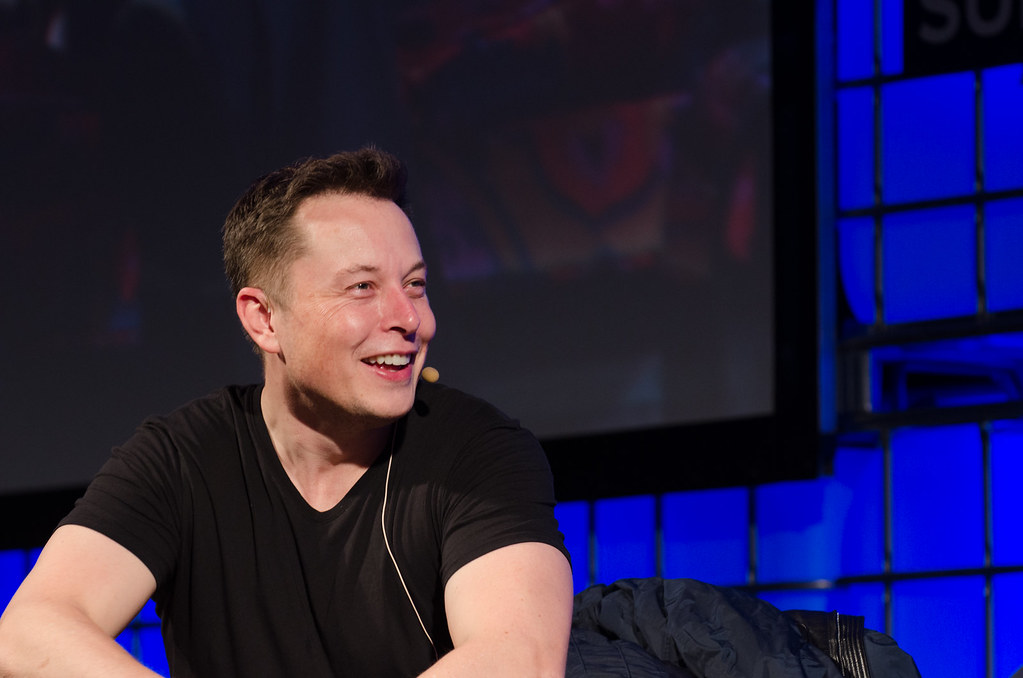
Few business leaders have permeated popular culture as deeply as Elon Musk. The ambitious entrepreneur has become a central fixture of internet culture while amassing a historic fortune that establishes him as the world’s first trillionaire. Even during a period of high economic inequality and souring public sentiment toward the ultra-wealthy, Musk has maintained a fiercely loyal following. He has done so despite his astronomical net worth and without relying on the folksy charm that endeared past tycoons like Warren Buffett to the public. While supporters view his unfiltered, raw style as a core asset, critics accuse him of wielding oligarchic power, raising serious corporate governance concerns and objecting to his increasingly partisan political activities.
Nevertheless, investor enthusiasm remains massive. SpaceX—the sprawling aerospace, satellite, and AI venture that forms the core of Musk’s empire alongside electric-vehicle pioneer Tesla—raised a record-breaking $75 billion in its initial public offering on Thursday. Prior to the share sale, Forbes estimated Musk’s net worth at roughly $780 billion, placing him vastly ahead of the world’s next-richest person, Alphabet co-founder Larry Page. Forbes Wealth deputy editor Matt Durot noted that the second-richest position usually hovers around $300 billion—less than a third of Musk’s potential value—and that only Oracle founder Larry Ellison had ever previously breached the $400 billion mark. According to calculations based on company filings, Musk’s net worth will top $1.1 trillion once trading commences on Friday, driven primarily by his $866 billion stake in SpaceX. This total includes long-term vesting stock components.
Musk originally became a household name through Tesla and SpaceX before expanding his cultural and media footprint with his $44 billion acquisition of Twitter in 2022. The platform gave him unmediated access to hundreds of millions of users, turning him into an influential commentator on immigration, free speech, government spending, and politics. His political evolution proved highly contentious, particularly his role last year within President Donald Trump’s Department of Government Efficiency (DOGE). This political entanglement triggered international consumer boycotts and protests that contributed to dipping Tesla sales throughout 2025.
Born in Pretoria, South Africa, to a Canadian mother and South African father, the 54-year-old entrepreneur graduated from the University of Pennsylvania in 1997. He assumed the role of Tesla CEO in 2008, operating on the conviction that high-performance electric vehicles driven by advanced software could reshape the global automotive industry. Traditional automakers initially dismissed the startup’s viability, skeptical that mass-producing electric vehicles could ever be profitable. However, Tesla’s eventual trillion-dollar market value forced the legacy auto industry to pivot toward electrification, earning Musk praise from former General Motors Vice Chairman Bob Lutz for renewing global respect for American automotive engineering. At the same time, Musk’s leadership has sparked shareholder friction, notably over a 2018 executive pay package once valued at $56 billion.
Today, Musk’s influence is so pervasive that analysts refer to his network of interconnected businesses as the “Muskonomy.” This ecosystem benefits from an “Elon premium”—a valuation boost rooted more in public faith in his vision than in standard financial data. Renaissance Capital senior strategist Matt Kennedy observed that much like Tesla, a stake in SpaceX is fundamentally a wager on Musk himself, noting that market caps pushing toward $2 trillion effectively discard traditional valuation models in favor of this unique premium. Alongside his primary anchors, Musk has also co-founded five other ventures, including tunneling company The Boring Company and neural-interface startup Neuralink.
This extreme concentration of influence under one individual continues to fuel intense corporate governance anxieties. Over the years, Musk has consistently turned friction with short sellers, regulators, rival billionaires, and media outlets into highly publicized social media feuds. His alliance with Donald Trump followed a similar trajectory. After heavily financing Trump’s presidential campaign and taking on a senior advisory role in the DOGE initiative, Musk emerged as a top White House corporate ally. However, the partnership eventually fractured over spending and policy disagreements, culminating in a public fallout. While the two have since adopted a more cooperative tone, the clash emphasized the increasingly tangled boundaries between Musk’s corporate interests and political goals. Still, for a vast base of investors, Musk’s controversial behavior is eclipsed by his unmatched execution. Even JPMorgan Chase CEO Jamie Dimon, who once engaged in a protracted legal dispute with Musk, recently embraced the entrepreneur, publicly calling him the Edison and Einstein of the modern era.
Click here for more on World News