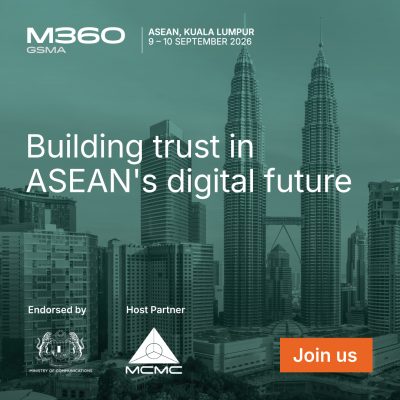
Kuala Lumpur, Malaysia: On the closing day of M360 ASEAN 2026, the GSMA released its annual Digital Nations Index, confirming Malaysia as one of ASEAN’s leading digital nations. Ranking second in the region behind Singapore, Malaysia is combining strong digital infrastructure, advanced data governance, cybersecurity leadership and ambitious AI policies to accelerate its digital transformation. Vietnam, Thailand and the Philippines also reported marked progress, closely following Malaysia.
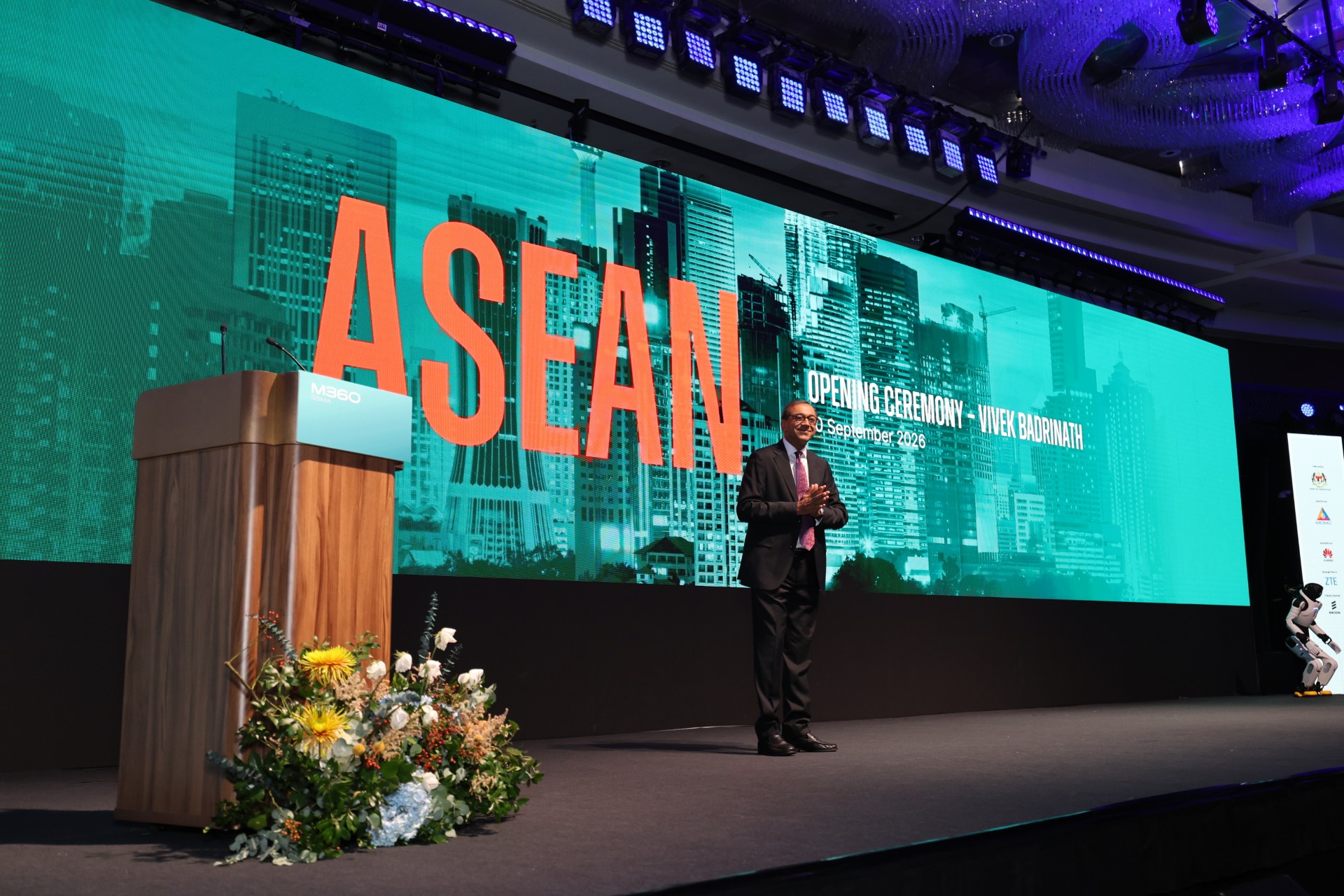
The findings from the GSMA’s Digital Nations ASEAN 2026 report echo the key themes discussed at this week’s M360 ASEAN event in Kuala Lumpur, where policymakers, regulators and industry leaders convened to address the priorities defining the region’s next phase of digital growth. This morning, attendees heard opening remarks from Y B. Dato’ Seri Fahmi Fadzil, Minister of Communications, Malaysia, H.E. Dr. Kao Kim Hourn, ASEAN Secretary-General, and Vivek Badrinath, Director General at the GSMA.
Vivek Badrinath, Director General, GSMA said: “The foundations have been built, and ASEAN has set itself a bold ambition: a $2 trillion digital economy by 2030. What’s clear is that ambition must now translate into action, connecting national strategies into a more integrated, interoperable regional digital economy. Governments, mobile operators, digital platforms all have a role to play. We have the infrastructure, the talent, and the ambition. What comes next depends on how well we work together.”
The final day of M360 ASEAN focused on how ASEAN can connect national digital strategies into a more integrated regional market as digital services become more deeply embedded across the region. Discussions brought together senior voices including Nie Ching Teo, Deputy Minister of the Ministry of Communications; and Dr. Hans Wijayasuriya, Chief Advisor to the President of Sri Lanka, alongside industry leaders such as Nik Rizal Kamil, Group CEO of Axiata Group Berhad; Carl Cruz, President and CEO of Globe Telecom; and Bhupinder Singh, President Asia of Vodafone.
Celebrating Excellence and Inclusion
M360 ASEAN 2026 also recognised outstanding contributions to the region’s digital progress through two award programmes. The Digital Nation Awards celebrated the countries, organisations and initiatives making the most significant impact on the region’s digital advancement, with PT. Telkomsel winning the Best Digital Nation Video Award, alongside category winners including Honor, Huawei, Maxis, NTT Docomo, One New Zealand and True Corporation, and Singtel. The Women Digital Leadership Awards honoured the achievements of women’s leadership and innovation in AI and digital technology across the mobile and technology ecosystem, celebrating Gold and Silver Award recipients from across the region.
A Pivotal Moment for ASEAN’s Digital Economy
As ASEAN enters its next phase of digital growth, connecting national digital strategies into a genuinely integrated regional market will matter as much as the pace of innovation itself. According to the Digital Nations Index, Malaysia’s progress is being driven by its AI Nation 2030 strategy, which brings together strong digital infrastructure, advanced data governance and cybersecurity leadership. Malaysia’s mobile network operators are also stepping up as builders of digital trust. In September 2025, CelcomDigi, Maxis, U Mobile, Telekom Malaysia and YTL Communications jointly launched a federated Number Verification API under the GSMA Open Gateway initiative, allowing banks and online retailers to verify a customer’s mobile number against real-time network data, a more secure alternative to SMS one-time passwords that helps reduce fraud and identity theft.
Malaysian operators are also advancing the digital inclusion agenda. Axiata’s Boost ecosystem uses e-wallet data to enable lending for SMEs with limited credit histories, with Boost Bank having disbursed nearly MYR150 million ($35 million) as of May 2025. In healthcare, CelcomDigi partnered with Hospital Pengajar Universiti Malaysia Sarawak to launch MediRover and MediDoc in November 2025 combining 5G and satellite connectivity with virtual consultations, diagnostic support and remote monitoring to improve rural healthcare access. Universiti Malaya Medical Centre also launched a 5G-enabled AI ‘holomedicine’ in December 2025.
Looking ahead
The GSMA will next convene the global mobile ecosystem at MWC26 Doha, taking place 8-10 November 2026 at the Doha Exhibition and Convention Center (DECC). MWC26 will be co-located alongside the ITU Plenipotentiary Conference (PP-26), the highest policy-making body of the ITU, the United Nations agency for digital technologies. This unique convergence will bring together telecommunications leaders, government officials and technology innovators to advance digital progress on a global scale.
To secure your place at MWC26 Doha, register here.
About the GSMA
The GSMA is a global organisation unifying the mobile ecosystem to discover, develop, and deliver innovation foundational to positive business environments and societal change. Our vision is to unlock the full power of connectivity so that people, industry, and society thrive. Representing mobile operators and organisations across the mobile ecosystem and adjacent industries, the GSMA delivers for its members across three broad pillars: Connectivity for Good, Industry Services and Solutions, and Outreach. This activity includes advancing policy; tackling today’s biggest societal challenges; underpinning the technology and interoperability that make mobile work; and providing the world’s largest platform to convene the mobile ecosystem at the MWC and M360 series of events.
Media contact
GSMA Press Office
pressoffice@gsma.com