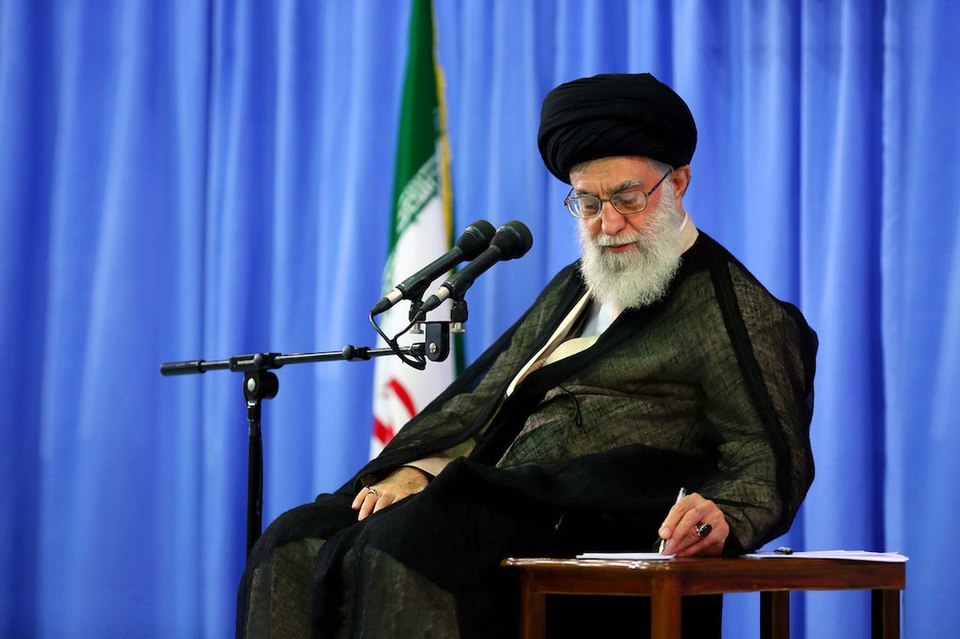
The United States and Iran have agreed to hold talks in Oman on Friday, according to officials from both countries, though major disagreements remain. Washington wants discussions to include Iran’s missile programme, while Tehran insists negotiations should focus solely on its nuclear activities.
The diplomatic push comes amid escalating tensions in the Middle East, with the U.S. increasing its military presence in the region and regional stakeholders seeking to prevent a conflict that could spiral into a broader war. Disputes over the meeting’s scope and location had recently raised uncertainty about whether it would proceed, leaving open the possibility of U.S. military action against Iran.
When asked whether Iran’s Supreme Leader Ayatollah Ali Khamenei should be concerned, U.S. President Donald Trump said he should be “very worried,” adding that negotiations were underway without providing further details.
Officials later confirmed that both sides agreed to shift the venue to Muscat after earlier considering Istanbul, though no agreement has been reached on the agenda.
Iran has pushed to limit the talks to its long-running nuclear dispute with Western nations. However, U.S. Secretary of State Marco Rubio said any negotiations would also need to address Iran’s ballistic missile capabilities, its support for armed groups across the Middle East, and its domestic human rights record, in addition to nuclear issues.
Iranian officials have rejected the inclusion of its missile programme in the talks and warned that expanding the agenda beyond nuclear issues could derail negotiations. U.S. special envoy Steve Witkoff, Trump’s son-in-law Jared Kushner, and Iranian Foreign Minister Abbas Araqchi are expected to take part in the discussions, according to officials.
The meeting was moved to Oman after Iran advocated for continuing previous discussions held there that had focused strictly on nuclear matters. Iran maintains that its nuclear programme is intended for peaceful purposes, while the U.S. and Israel have long accused Tehran of pursuing nuclear weapons.
Some Gulf nations may play a mediating role, although Iran has indicated a preference for direct bilateral talks with Washington.
The negotiations follow heightened tensions, including threats of U.S. military action during Iran’s recent crackdown on protests and the deployment of additional American naval and air assets to the region. Military movements have included an aircraft carrier, warships, fighter jets, surveillance aircraft, and refuelling tankers.
Regional concerns have intensified following last year’s conflict involving Israel and Iran, raising fears of a wider war that could destabilise the region. Rising tensions have also contributed to higher oil prices.
Trump has warned that serious consequences could follow if a deal is not reached, increasing pressure on Iran. Iranian leaders, meanwhile, are concerned that a U.S. strike could weaken domestic stability by triggering renewed public unrest.
Tehran is also seeking relief from Western sanctions tied to its nuclear programme, which have severely impacted its economy and contributed to recent domestic protests.
Washington has reportedly outlined several demands for resuming talks, including ending uranium enrichment in Iran, limiting its ballistic missile programme, and halting support for regional armed groups. Iran has rejected these conditions as violations of its sovereignty, although some officials have indicated flexibility regarding uranium enrichment.
Iran says its enrichment activities are for civilian use and has stated that work halted following U.S. strikes on Iranian nuclear facilities last June, which took place during the closing phase of a 12-day Israeli bombing campaign. Iran retaliated with missile and drone strikes against Israel.
Iran has since said it rebuilt its missile arsenal and warned it would deploy it if national security is threatened.
Recent incidents have further strained relations, including the U.S. military shooting down an Iranian drone that approached the aircraft carrier Abraham Lincoln in the Arabian Sea, as well as an encounter in the Strait of Hormuz in which Iranian forces allegedly approached a U.S.-flagged oil tanker and threatened to board it.
Click here for more on World News