The threat of a nuclear accident in Ukraine is growing as winter approaches, nuclear safety regulators representing 38 countries warned on Monday, calling on Russia to halt attacks on the country’s electricity infrastructure.
Russia has intensified drone and missile strikes against Ukrainian energy facilities, including power plants, transmission lines and electricity substations. These attacks have further weakened an electricity network already under severe pressure after nearly five years of war.
In a joint statement released ahead of its publication, the nuclear safety organisations expressed serious concern over the growing threats to nuclear safety resulting from Russia’s continued military operations and strikes on Ukraine’s energy infrastructure. They stressed the urgent need for Moscow to stop targeting nuclear facilities and the electricity systems required to maintain their safe operation.
Regulators are particularly concerned that disruptions to the national power grid could make it increasingly difficult for Ukraine’s nuclear power plants to maintain cooling systems for nuclear fuel and prevent a potential meltdown. Such an incident could release radioactive material into the atmosphere, similar to the 1986 Chornobyl disaster, regarded as the world’s worst civil nuclear accident.
The Chornobyl disaster resulted in the spread of radioactive substances, including iodine-131, caesium-134 and caesium-137, across parts of Ukraine, Belarus, Russia and northern and central Europe.
The warning was issued by three organisations: the Heads of the European Radiological Protection Competent Authorities (HERCA), the Western European Nuclear Regulators Association (WENRA) and the Heads of the Nordic Radiation Safety Authorities (NORA).
Together, these bodies represent 38 countries, including all European Union member states, the United States, the United Kingdom, Canada and Japan.
Winter raises nuclear safety concerns
In an interview with Reuters, Per Strand, head of HERCA and NORA, said Russian attacks had become increasingly destructive in recent weeks, with the use of more powerful drones carrying larger payloads and featuring greater targeting precision.
He warned that the latest military tactics could make this winter the period of highest risk for a nuclear accident in Ukraine.
According to Strand, the most serious potential scenario would involve a nationwide collapse of Ukraine’s electricity grid, simultaneously affecting all nine nuclear reactors currently producing power.
He cautioned that simultaneous radioactive releases from multiple reactors could create an extremely serious emergency. However, he stressed that such a scenario could still be prevented if immediate action was taken and Russia faced sufficient pressure to stop attacking critical energy infrastructure.
Strand added that European countries should strengthen cooperation on emergency planning and preparedness to manage the potential consequences of a nuclear incident if the situation deteriorates.
Ukraine’s nuclear facilities face growing pressure
On Saturday, the International Atomic Energy Agency (IAEA) reported that military activity had disrupted Ukraine’s electricity supply during the previous week, forcing some operating nuclear power units to reduce their output.
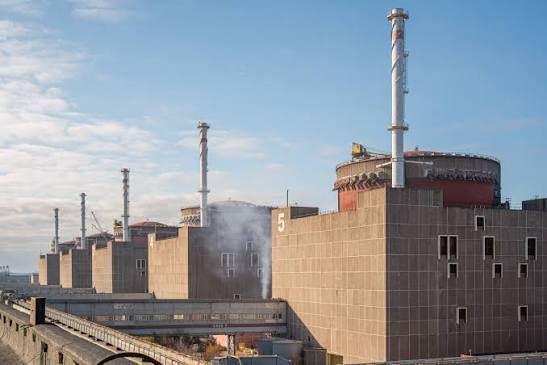
Ukraine has four nuclear power plants, three of which are currently operational and expected to provide around 80% of the country’s electricity requirements this winter. The fourth facility, the Zaporizhzhia Nuclear Power Plant, the largest in Europe, remains under Russian control in territory close to the front line.
Although Zaporizhzhia is not currently generating electricity, it requires an external power supply to operate cooling systems and prevent nuclear fuel from overheating. The facility depends on electricity supplied through Ukraine’s power network.
According to the IAEA, the plant has experienced 27 losses of external electricity supply since the beginning of the war, forcing it to rely on emergency diesel generators. Since late March, it has depended on just one external power line.
Russia and Ukraine have repeatedly accused each other of attacking the nuclear facility and damaging electricity transmission lines supplying the plant, further heightening concerns over its operational safety.
Click here for more on World News