Emergence, the New York-based frontier agentic AI company founded by three Indian-American scientists from IBM Research, today announced the launch of Emergence India Labs (EIL) – India’s first dedicated AI research and development lab focused on autonomous AI agents. The lab will accelerate the development of homegrown next-generation autonomous systems capable of operating mission-critical digital and physical infrastructure, positioning India to move beyond its traditional IT services model toward advanced manufacturing, logistics, and industrial automation.
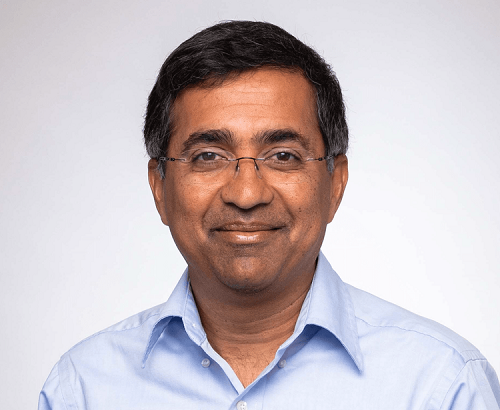 |
Dr. Satya Nitta, Co-founder and CEO of Emergence
Backed by tens of millions of dollars in initial inward R&D investment, with significant long-term expansion planned, EIL is expected to scale to 500 world-class research scientists and engineers over the next three to four years – marking one of the most ambitious expansions of frontier AI research capacity in India.
Strategically located near the Indian Institute of Science (IISc) in Bengaluru, EIL will collaborate closely with the IISc ecosystem through joint research, exchanges, hackathons, and summer schools to build a next-generation talent pipeline in autonomous systems. Professor Siddhartha Gadgil of IISc joins as Chief Scientist while maintaining his academic affiliation.
Emergence India Labs is envisioned not only as a research center, but as the nucleus of a broader public-private partnership to ensure that India builds foundational AI technologies domestically rather than importing them. While the initiative begins within Emergence, the long-term ambition is to convene government, industry, academia, and global technology leaders around a shared mission: building the foundational systems that will power the next generation of digital and physical infrastructure. Emergence issued a call to action for partners to join this endeavor, with success over the next five years measured by how effectively Emergence India Labs catalyzes frontier R&D programs to be headquartered in India.
Central to that ambition is the lab’s structural design. Unlike multinational R&D outposts that operate as satellite extensions of overseas global headquarters, Emergence India Labs is conceived as a core, AI-native R&D epicenter in India, designed to anchor sovereign AI capability. For more than two decades, India’s technology sector has been centered on IT services; the next chapter will be defined by building frontier autonomous systems that transform enterprise software, AI capable of operating digital infrastructure, with the same foundational technologies powering advances in physical AI domains such as manufacturing, logistics, ports, factories, and essential infrastructure. AI adoption in Indian manufacturing has already surged – with 65% of manufacturers integrating AI by 2024, up from 45% in 2022 – and the domestic AI-in-manufacturing market projected to grow at roughly 40% annually, surpassing $8 billion by 2030.
Recent global research indicators underscore the urgency of this moment. The Nature Index 2025 Research Leaders report shows that Chinese universities now occupy nine of the top ten global research positions in natural sciences, a dramatic shift east in global scientific leadership over the past decade. In parallel, in 2024, China accounted for more than half of all industrial robot installations worldwide – roughly 54% of the global total – with hundreds of thousands of new robots deployed in factories each year. As technological power rebalances globally, India has a strategic opportunity to position itself at the frontier of autonomous systems research.
The launch reflects a broader global shift in AI. The debate is no longer only about training the largest language models, but about developing the autonomous systems layer that enables AI to operate safely and reliably in real-world environments.
“We believe the most immediate opportunity lies in building autonomous AI systems capable of operating the world’s most mission-critical digital infrastructure – from financial networks and telecom platforms to cloud and digital public systems,” said Satya Nitta, Co-founder and CEO of Emergence. “By mastering autonomy in the digital realm, we establish the foundation to extend into robotics, advanced manufacturing, and next-generation industrial infrastructure.”
“For more than two decades, India’s technology sector has been anchored in IT services,” Nitta added. “The next chapter must be defined by building frontier autonomous systems that power critical infrastructure. The hardest problem in robotics isn’t movement – it’s thinking. By focusing on agentic systems, we are solving reasoning under uncertainty. Around the world, leading economies are embedding AI into physical systems at scale. India must participate fully in shaping that transformation.”
“Ultimately, our success will be defined by whether Emergence India Labs helps anchor more frontier R&D in India – making the country a primary home for breakthrough innovation and enabling world-class talent to build and lead from here.”
EIL will place particular emphasis on building a talent pipeline around LEAN as a grounding layer for AI agents, demonstrating how formal verification can be embedded at every level of autonomous decision-making.
“The convergence of formal proof systems and the explosive growth of artificial intelligence creates an unprecedented opportunity – and necessity – to build reliable, mathematically grounded autonomous systems,” said Professor Siddhartha Gadgil of the Indian Institute of Science and Chief Scientist at Emergence India Labs. “Driven by a rich scientific tradition and a dynamic generation of engineers and entrepreneurs, India has the potential to drive this new frontier. By anchoring the entire spectrum of innovation here in Bangalore, from foundational research to real-world application, we will catalyze an ecosystem of sustained, world-class breakthroughs, ensuring India helps architect the future of intelligent systems.”
Anchoring Frontier Research in India
Emergence is widely recognized as a leading agentic AI company, distinguished by its patent-to-research ratio and a team of resident scientists drawn from the world’s foremost R&D institutions, including Google DeepMind, IBM T.J. Watson Research Labs, and the Allen Institute for AI. The company has pioneered several benchmark-leading advances in autonomous agents, including its breakthrough in recursive intelligence, enabling AI systems to autonomously generate new AI capabilities. Central to its approach is a formally verified control architecture for large-scale autonomous AI systems, separating stochastic reasoning from deterministic execution and enforcing mathematical guarantees at runtime.
“Thousands of Indian researchers, engineers, and technology leaders are at the heart of many of the world’s most significant AI breakthroughs, contributing across leading Silicon Valley labs and global technology companies,” added Nitta. “The talent is not in question. The strategic opportunity now is to anchor more of that leadership at home – and to channel it towards areas such as autonomous systems that operate critical infrastructure. India has also long demonstrated disciplined, resource-efficient innovation. Its successful Chandrayaan-3 lunar landing – delivered at a significantly lower cost to comparable international missions – stands as another powerful example of strategic engineering excellence.”
Inward Investment and Ecosystem Impact
Led by internationally recognized scientists, including Dr. Prasenjit Dey (PhD, EPFL; IIT Delhi), who will lead the lab on the ground in India, Dr. Ravi Kokku (PhD, UT Austin; IIT Kharagpur), and Professor Siddhartha Gadgil of IISc (PhD, CalTech, Indian Statistical Institute), Emergence India Labs, aims to strengthen India’s AI ecosystem by:
-
Supporting the local start-up ecosystem with access to frontier autonomous systems technologies
-
Developing top-tier AI research talent in collaboration with academia, industry, and government
-
Anchoring breakthroughs in autonomous systems within India
-
Contributing to the development of next-generation autonomous systems capable of operating mission-critical digital and physical infrastructure built in India
-
Publishing frontier research in leading global venues (e.g., NeurIPS, ICML, ICLR)
“This is a national-scale scientific moonshot,” added Nitta. “For researchers, it is a chance to do career-defining work at the frontier of autonomous intelligence. For investors, it is an opportunity to back a platform with generational impact. And for India, it signals the next step in an ongoing journey – strengthening its position as one of the defining centers of gravity in the global AI landscape.”
“Today, we urge public and private investors, national labs, R&D centers, universities, and technology leaders to join us in this endeavor to scale the next generation of frontier AI innovation from India.”