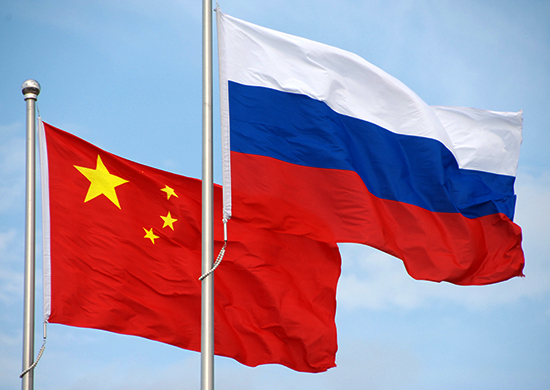
With its supreme leader killed and its military under sustained pressure from the United States, Iran now finds itself increasingly isolated, with long-time partners Russia and China offering little beyond diplomatic criticism and statements of concern.
Tehran has responded to U.S. and Israeli strikes by broadening the conflict beyond the Middle East, launching missiles and drones that have sent shockwaves through global energy markets, alarmed governments from Washington to Beijing, and disrupted shipping through the Strait of Hormuz, a route that carries about 20% of the world’s oil supply.
Iranian missiles have reached as far as Cyprus, Azerbaijan, Turkey and several Gulf states, bringing the conflict closer to their borders by targeting critical businesses, energy facilities and U.S. military bases. Oil installations, refineries and major supply routes were struck, severely disrupting crude and natural gas flows.
Restraint driven by strategic calculation
With the Strait of Hormuz already closed, the attacks have pushed energy prices higher, shaken global markets and forced major economies to respond quickly, highlighting the world’s vulnerability to the fallout from Iran’s actions.
Analysts say Russia and China’s cautious response reflects a strategic calculation: directly intervening in a conflict involving Iran, Israel and the United States would carry significant risks and uncertain benefits—costs neither country appears willing to bear.
“Putin has other priorities, and chief among them is Ukraine,” said Anna Borshchevskaya, a Russia specialist at the Washington Institute. “It would be unwise for Russia to enter a direct military confrontation with the United States.”
A senior Russian source said the escalating tensions around Iran and the Gulf are already diverting global attention away from the war in Ukraine. “That’s simply the reality. Everything else is emotion about a ‘fallen ally’,” the source said.
Both Beijing and Moscow have previously supported Iran in building military capabilities to counter pressure from Washington and Israel, supplying missiles, air-defence systems and technology aimed at strengthening deterrence and raising the cost of potential attacks. However, that support now appears to have reached its limits.
A strategic paradox
China has spent years positioning itself as a diplomatic player in the Middle East, whilst Russia has framed Iran as a key partner in its broader alignment against Western influence. Yet as the conflict intensified, both countries found themselves constrained—China by its dependence on Gulf energy and trade, and Russia by the ongoing war in Ukraine, which has stretched its military and diplomatic capacity.
The outcome is a striking paradox: Iran remains strategically important to both powers, but not important enough for them to risk direct confrontation.
With Russia’s military resources, diplomacy and economy heavily tied up in Ukraine, President Vladimir Putin appears focused on avoiding escalation with Washington and safeguarding Russia’s broader interests in the Middle East rather than betting on Iran’s battlefield prospects.
“If Russia had backed Iran directly, it would have alienated Gulf states and Israel,” Borshchevskaya said. “That’s not something Putin wants.”
China’s measured response also reflects its long-standing strategy of avoiding firm security commitments outside its immediate strategic interests.
China prioritises economic ties
Unlike the United States, whose alliances often include mutual defence commitments, China tends to favour partnerships centred on trade, investment and arms sales—relationships designed to avoid pulling it into costly conflicts beyond East Asia, said Evan A. Feigenbaum of the Carnegie Endowment for International Peace.
As one of the world’s largest trading nations and energy consumers, Beijing maintains relations with both Iran and its Sunni Gulf rivals. Similarly, in Latin America it has avoided relying too heavily on any single partner such as Venezuela.
“If Beijing wanted to do more, it would not divert strategic attention or military assets away from its core security priorities,” said Henry Tugendhat of the Washington Institute. “Its focus remains on Taiwan, the South China Sea and perceived threats from the U.S. and Japan.”
The conflict could even offer China some strategic advantages. Observing from the sidelines, Beijing can watch as U.S. forces are tied up far from East Asia and military stockpiles are stretched, whilst gaining insights into American capabilities and operations that could influence its thinking about a potential Taiwan scenario.
China’s main vulnerability lies in energy supplies passing through the Strait of Hormuz, which accounts for roughly 45% of its oil imports. However, analysts say Beijing has built significant strategic reserves and has large volumes of Iranian oil already stored in tankers or reserves.
The crisis has also allowed both Moscow and Beijing to position themselves as potential mediators. China said Foreign Minister Wang Yi has spoken with European and Arab counterparts to encourage dialogue, whilst Putin has held similar discussions with Gulf leaders and Iranian officials.
Higher oil prices benefit Moscow
Russia may also see tangible gains from the situation, as rising oil prices strengthen its wartime economy and a United States preoccupied with the Middle East has less capacity to focus on Ukraine.
However, analysts say Moscow does not necessarily benefit from the collapse of Iran’s government, though it is also unwilling to tie its fate to Tehran’s survival.
Instead, Russia appears to be hedging its position—maintaining flexibility regardless of how the conflict unfolds and keeping open the possibility of building relations with any future Iranian leadership, even one closer to Washington.
A Russian source pointed to Syria as an example. Despite supporting former president Bashar al-Assad for years, Moscow retained its Mediterranean bases and quickly developed ties with Syria’s new leader, Ahmed al-Sharaa—illustrating its readiness to prioritise long-term strategic influence over loyalty to individual allies.
Click here for more on World News