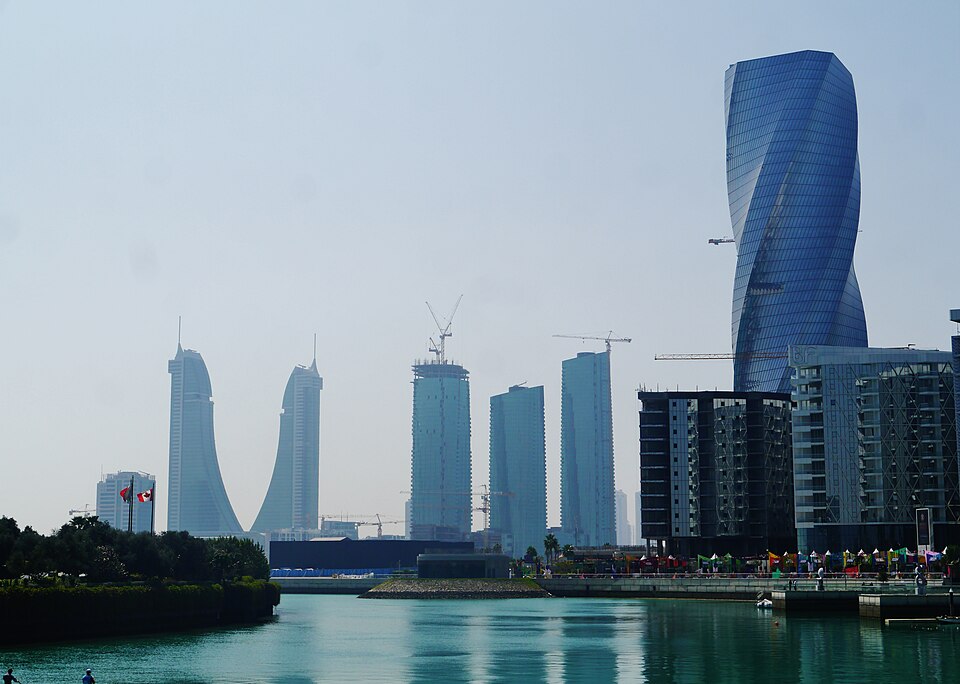
Bahrain’s non-oil economy expanded by 2.2% year-on-year at constant prices in the first quarter of 2026, demonstrating resilience even as overall real GDP shrank by 3.8%, according to the Ministry of Finance and National Economy’s latest report. The headline decline was heavily driven by a 37.2% contraction in the oil sector, triggered by maritime traffic disruptions through the Strait of Hormuz—stemming from the regional conflict involving Iran that hit in March—alongside scheduled maintenance. At current prices, overall GDP fell 2.7%, with oil activities dropping 31.1% and non-oil activities rising 1.9%.
The non-oil sector represented 90.1% of real GDP in Q1, with 9 out of 13 non-oil sectors posting positive growth. Financial and insurance services, the largest contributor to GDP, expanded 8.6% year-on-year to claim a 19.7% share of total output. Manufacturing followed at 14.6%, while public administration and construction accounted for 9% and 7%, respectively, with the remaining non-oil activities contributing between 2% and 5% each.
Inward foreign direct investment (FDI) grew 2.6% year-on-year in Q1 2026, pushing the total FDI stock to BHD 17.6 billion. The report also highlights Bahrain’s strong standing across global benchmarks, ranking 1st worldwide in 67 development metrics. Notable distinctions include taking top global honors for Public-Private Partnerships in the IMD World Competitiveness Ranking 2026, Islamic Finance Governance in the DinarStandard report, and Attracting Investments in the Chandler Good Government Index 2026. Additionally, the Kingdom climbed three spots to rank 6th globally out of 159 economies in the ITU’s ICT Development Index 2026.
Click here for more on Business