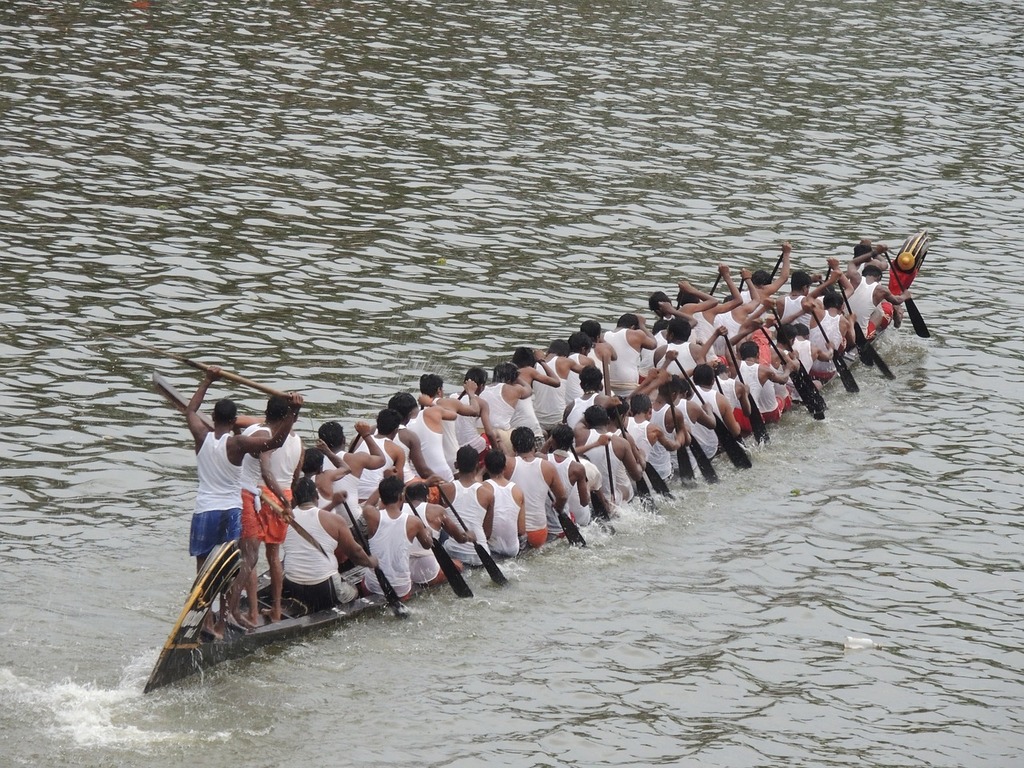
Around twenty 100-foot-long wooden boats, each powered by roughly 100 rowers, are set to navigate Kerala’s backwaters this weekend to compete for the prestigious Nehru Trophy in the centuries-old sport of “vallam kali,” or snake boat racing. Thousands of spectators will gather along the shores and on houseboats to watch these slender vessels, recognizable by their raised cobra-like sterns, race along a 1.4 km course on Punnamada Lake. The competition features oars striking the water over 90 times per minute, accompanied by synchronized chants, whistles, and the heavy rhythmic beat of wooden poles pounding on the decks. The surrounding Alappuzha district, historically known as Kerala’s rice bowl due to its vast paddy fields, contains some of the lowest-lying terrain in India and frequently faces severe monsoon flooding.
Despite the swollen Pamba River and recent devastating floods that killed 28 people and submerged homes, churches, and roads across parts of Kainakary, local training schedules remained uninterrupted. Vakkachan Theverkkat, a former senior oarsman and current captain of the Kainakary-based United Boat Club (UBC), used the elevated water levels to train his 150-member roster twice daily. UBC, which has competed for the trophy since 1963 and holds a record 12 victories alongside numerous second-place finishes, is fielding “Veeyapuram”—the winning boat from last season’s Nehru Trophy and Champions Boat League. Veeyapuram is a community-owned boat built in 2019 after villagers raised 9 million Indian rupees ($94,300) for its launch. Despite seasonal operational costs reaching nearly 7 million rupees ($73,000) and minimal financial returns or state support for boat-owning communities, local organizers remain committed to sustaining the tradition.
First engineered as battle canoes in the 13th century, these snake boats now serve as cultural symbols of interfaith harmony within the state. Veeyapuram itself features a green Islamic prayer cloth, a Hindu flower garland, and a Christian cross, having received blessings from clergy of all three faiths, while the traditional songs chanted during races integrate motifs from each community. The vessels are treated with deep reverence throughout their lifespans, which can extend over several decades, and upon retirement, they undergo a formal cremation ceremony intended to symbolically transfer their spirit to a replacement vessel.
Click here for more on Lifestyle