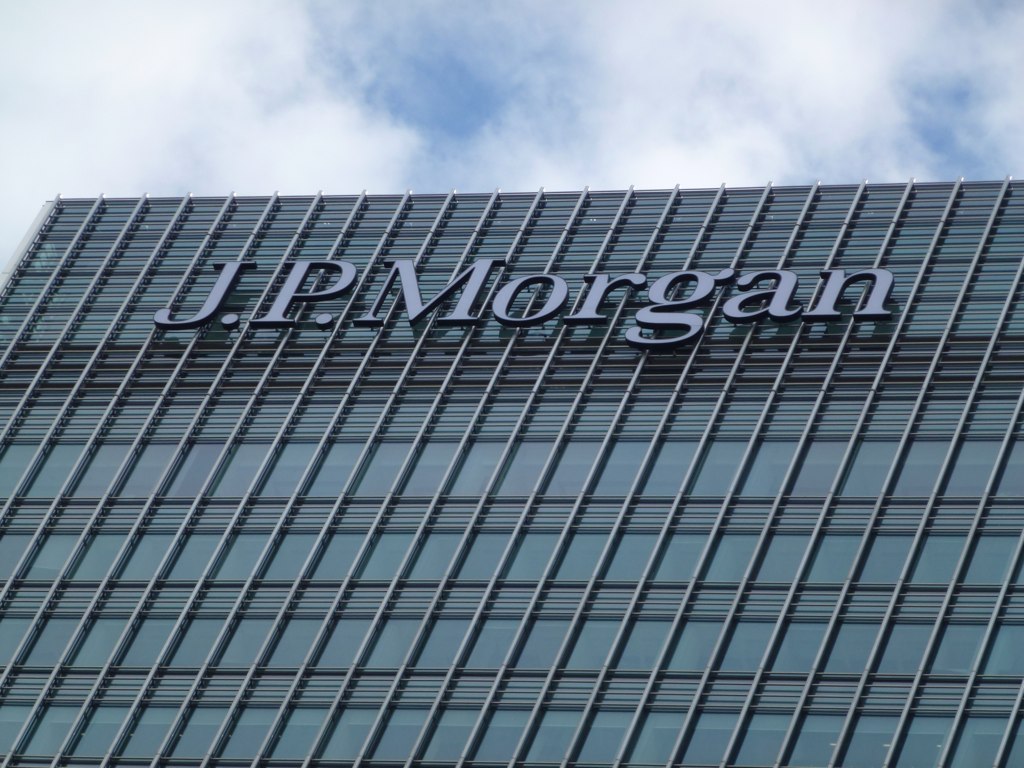
The global trillion-dollar market capitalization elite remains overwhelmingly dominated by technology titans, with Apple leading the pack at a $4.4 trillion valuation driven by iPhone sales and Alphabet following closely behind at $4.2 trillion on its search and digital advertising strength. However, JPMorgan Chase is rapidly approaching this exclusive club after its stock closed at a record $363 per share, pushing its market valuation to approximately $970 billion. Requiring just a 3% stock price gain to break through the trillion-dollar barrier, the American banking giant is already more than twice the size of its nearest international competitor, Bank of America, which holds a market capitalization of around $448 billion. Wells Fargo analyst Mike Mayo considers the milestone imminent, projecting a $390 price target that comfortably places the firm over the threshold and framing the achievement as the culmination of a quarter-century transformation.
The modern incarnation of JPMorgan Chase began with the merger of JPMorgan and Chase Manhattan in 2000, followed by the acquisition of Bank One in 2004 that brought Jamie Dimon to the firm before he assumed the CEO role in 2006. Under Dimon’s leadership, the bank expanded aggressively through strategic acquisitions, absorbing Bear Stearns and Washington Mutual during the 2008 financial crisis, acquiring UK broker Cazenove, and purchasing First Republic Bank in 2023. Today, the institution holds a market-leading position across nearly all its operating segments. On the consumer side, Chase controls over 11% of US retail deposits across more than 5,000 domestic branches—with plans to open 500 more—while also launching digital banking operations in Europe. In capital markets, LSEG data shows JPMorgan generated $9.7 billion in advisory and underwriting fees last year to secure a 7.9% global investment banking market share, topping industry rankings for the 16th consecutive year. Furthermore, its trading division pulled in $35.8 billion in revenue, split between $22.5 billion in fixed income, currency, and commodities, and $13.3 billion in equities.
The bank’s path to a trillion-dollar valuation reflects a prolonged surge that saw its stock price more than triple from $104 in September 2022, when its market cap stood at roughly $300 billion. According to Mayo, this growth stems from executing a “fortress balance sheet” strategy that balances aggressive market share expansion with defensive risk management. The firm is currently capitalizing on a capital markets supercycle driven by massive technology expenditures and a permissive regulatory environment, positioning itself as both a financier and adopter of artificial intelligence. While potential headwinds like an economic recession, an AI market correction, or the sudden departure of Jamie Dimon—whose exit Mayo estimates could briefly erase $50 billion in value—could create short-term volatility, analysts expect JPMorgan to maintain its long-term trajectory and potentially reach a $2 trillion valuation within the next eight years.
Click here for more on Banking