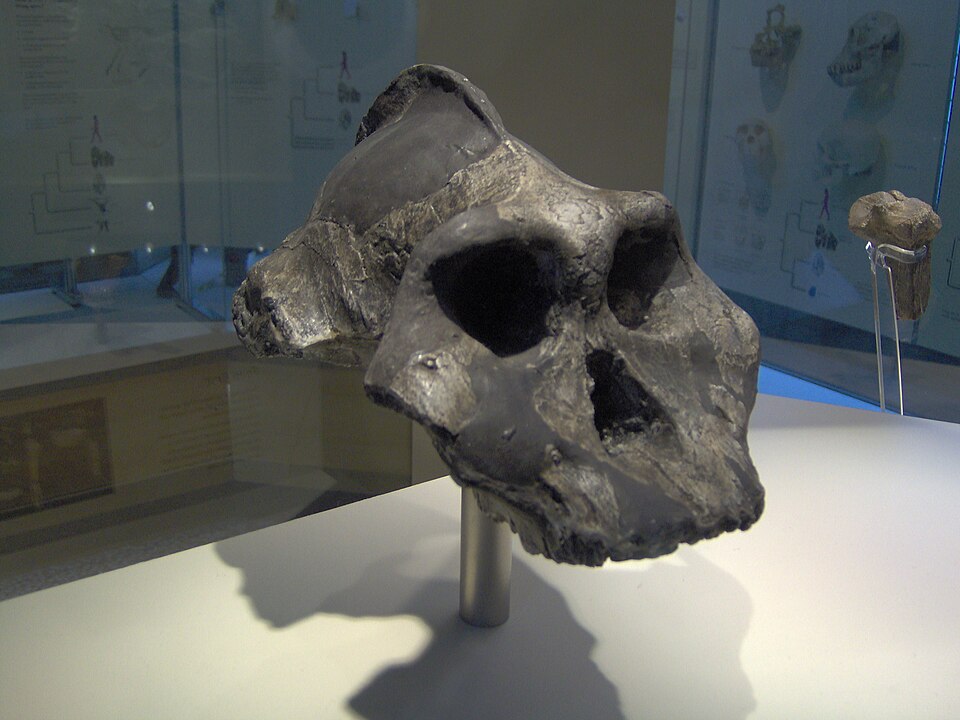
A set of 1.43-million-year-old fossilized footprints discovered on a muddy lakeshore near Kenya’s Lake Turkana is offering unprecedented insights into Paranthropus boisei, an extinct hominin species best known for its massive jaws, skull crests, and large molars adapted for chewing tough vegetation. The 21 footprints, attributed to eight individuals walking together into and out of shallow water, provide rare anatomical data from below the neck. The size and gait of the tracks suggest these individuals were adult males who stood up to six feet tall and weighed around 165 pounds, revealing that the species reached body sizes comparable to Homo erectus rather than the much smaller dimensions long assumed by researchers.
Beyond physical scale, the discovery sheds light on the social dynamics of Paranthropus boisei shortly before its extinction around 1.2 million years ago. Because the group appears to have consisted entirely of adult males traveling without females or offspring, scientists speculate the tracks may represent a bachelor group similar to those seen in modern gorilla populations, where displaced males band together. Coexisting in the region alongside Homo erectus, this heavy-jawed cousin represents the final species of the Paranthropus genus and the last hominin line outside our own genus, Homo, to walk the earth.
Click here for more on Lifestyle