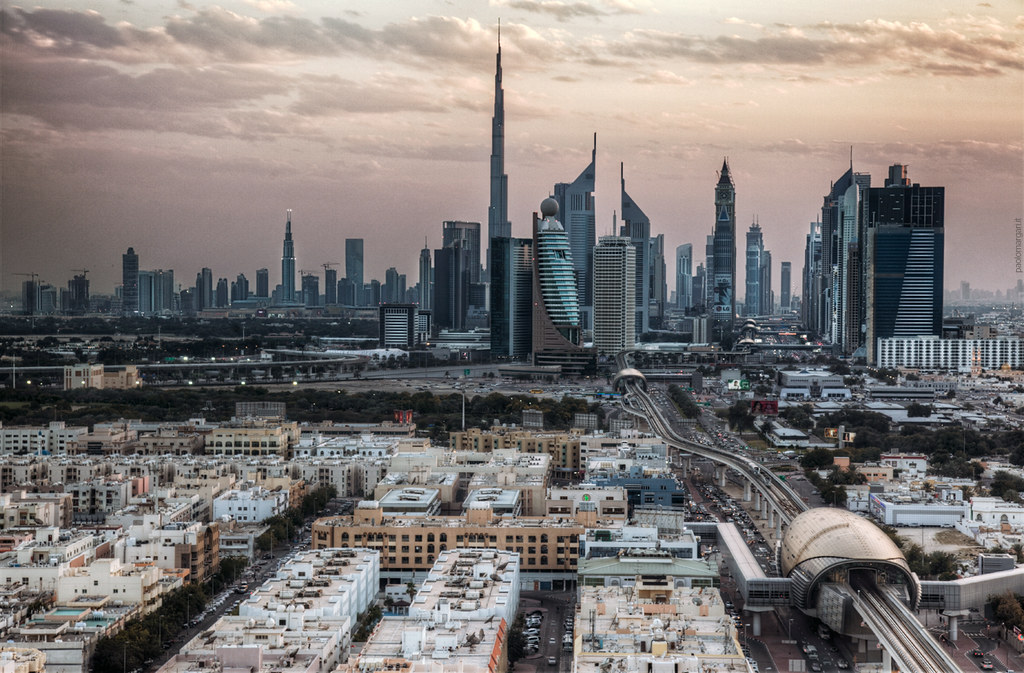
Prominent UAE developers are steadily building diversified, recurring income portfolios to insulate themselves from property market volatility, a strategic shift that is accelerating amid heightened geopolitical tensions. Leading the transition are major players like Dubai’s Emaar Properties and Abu Dhabi’s Aldar Properties. Analysts note that while current regional uncertainties add urgency to the move, this diversification reflects a mature, long-term strategic evolution rather than a frantic, short-term reaction.
The shift traces back to the 2007–2008 financial crisis, which exposed the dangers of high leverage and an over-reliance on off-plan sales. In response, developers adopted a develop-to-hold model, expanding into retail, logistics, hospitality, education, and commercial leasing. This approach reduces exposure to cyclical property sales, offers better earnings predictability, and attracts investors looking for reliable yields over speculative returns. Financial results underscore the success of the model: Emaar’s recurring revenue assets generated over AED 8 billion ($2.2 billion) in EBITDA in 2025, while Aldar has already deployed AED 4.9 billion into its develop-to-hold asset base, with another AED 20.1 billion worth of projects in the pipeline.
These portfolios serve as vital credit buffers, providing financial stability during real estate downturns. Recent market transactions highlight this ongoing trend. For instance, UAE-based developer Arada recently acquired a controlling stake in Abu Dhabi’s Reem Hospital to intentionally diversify its revenues away from cyclical residential developments. Similarly, privately owned SRG Properties sold a residential and community retail asset to Aldar for AED 1.1 billion. Industry experts emphasize that the decision to sell an asset or retain it for long-term income is now integrated early on during the land acquisition phase. This strategy is also heavily utilized by prominent family offices—such as Al Nabooda, AW Rostamani, and Al Futtaim—allowing them to organically fund new projects with minimal debt.
While developers currently prefer holding onto these stable assets to maximize cash flow, analysts expect they may eventually pursue partial monetization via institutional partnerships, selective sales, or public listings as the market matures. Despite the positive outlook, a prolonged geopolitical conflict presents a core risk: if regional instability slows down population inflows, consumer demand in retail and education sectors could soften. While some developers might face minor project delays, industry activity remains steady, and global investors continue to back the UAE’s long-term economic narrative without pulling back capital.
Click here for more on Business