Israel and Iran exchanged new attacks on Friday, a day after Tehran hit an Israeli oil refinery and after U.S. President Donald Trump warned Israel against striking an Iranian offshore gas field shared with Qatar.
Israel said it had launched strikes on Tehran targeting what it described as the infrastructure of the Iranian regime, without giving further details. Iran responded with a fresh missile barrage on Israel, setting off air raid sirens in Tel Aviv as air defence systems intercepted incoming fire over the city.
The conflict, which began after the U.S. and Israel launched joint attacks on February 28, has killed thousands, mostly in Iran and Lebanon, spread across the wider Middle East, and rattled the global economy.
The United Arab Emirates also reported a missile threat early Friday as Muslims marked Eid al-Fitr, while Kuwait said one of its oil refineries was hit by a drone strike. The latest attacks followed several days of Iranian strikes on regional energy infrastructure that have unsettled global markets.
Energy prices rose on Thursday after Iran retaliated for an Israeli strike on a major gas field by targeting Qatar’s Ras Laffan Industrial City, which handles around one-fifth of global LNG supplies and suffered damage expected to take years to repair. Saudi Arabia’s main Red Sea port, used to reroute some exports around the closed Strait of Hormuz, was also attacked the same day.
Oil prices fell on Friday after Western countries and Japan signalled support for efforts to secure shipping through the strait, while the U.S. announced plans to raise oil output.
The attacks on energy facilities across the region highlighted Iran’s ability to inflict serious costs on the U.S.-Israeli campaign and exposed the limits of air defences in protecting critical Gulf energy infrastructure.
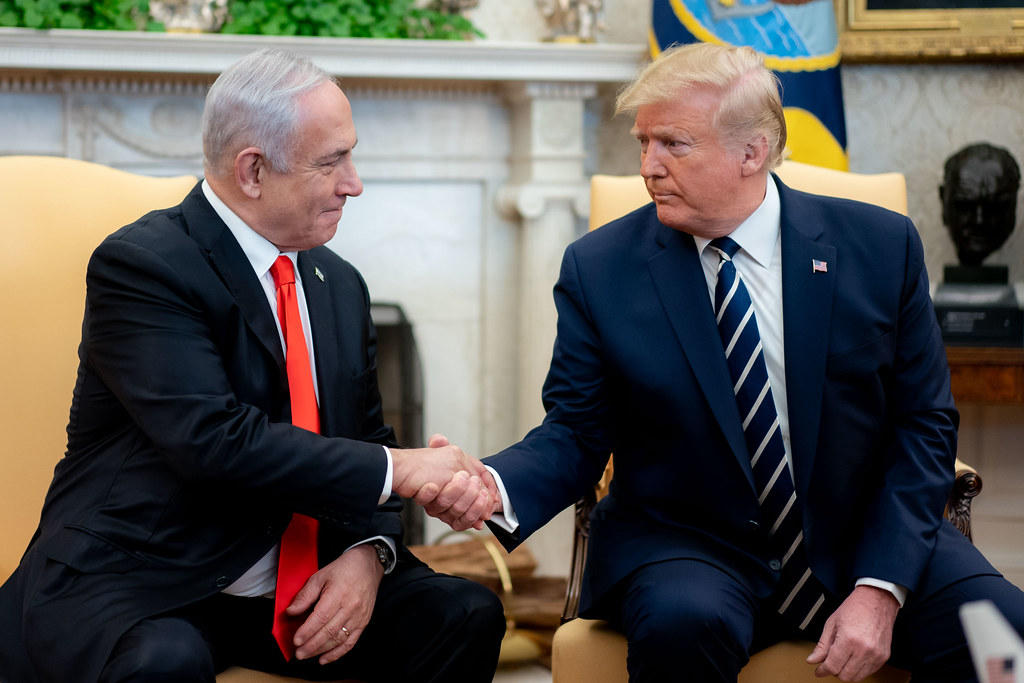
Facing political pressure over rising fuel prices ahead of November’s midterm elections, Trump criticized allies for responding cautiously to his calls to help secure the Strait of Hormuz. He said Israeli Prime Minister Benjamin Netanyahu had agreed not to repeat the strike on energy infrastructure. Netanyahu later said Israel had acted independently in bombing Iran’s South Pars gas field.
Netanyahu also said Iran was being severely weakened and no longer had the ability to enrich uranium or produce ballistic missiles, though he added that any revolution in the country would require a ground element, without elaborating.
Some analysts say the war has strengthened Netanyahu politically by reshaping Israel’s domestic landscape in his favour, while complicating Trump’s position by pulling him into a conflict with no clear end, increasing risks for Gulf allies and undermining the economic message that helped power his return to office. The war began even as Washington and Tehran had been holding talks over Iran’s nuclear programme.
With no resolution in sight and fears growing of a global oil shock, Britain, Canada, France, Germany, Italy, the Netherlands and Japan issued a joint statement saying they were ready to support efforts to ensure safe passage through the Strait of Hormuz.
They also pledged additional steps to stabilize energy markets, including working with producing nations to increase supply.
Still, there was little sign of immediate action. German Chancellor Friedrich Merz said any role in securing the strait would only be considered after hostilities end, while French President Emmanuel Macron said the priority remained upholding international law and pushing for de-escalation.
Macron, speaking after a European summit in Brussels, said he had not heard any EU leader express willingness to enter the conflict, and that the opposite was true.
The reluctance of major U.S. allies to get involved reflects skepticism toward a war that European leaders say they did not want, has unclear goals, and remains largely outside their control.
Israel’s strike on Iran’s South Pars gas field, which Trump said Washington had not known about beforehand, also pointed to possible gaps in coordination between the main parties. At the same time, Israeli officials said the operation had been discussed with the United States but was unlikely to be repeated.
U.S. Director of National Intelligence Tulsi Gabbard told lawmakers that Washington and Israel were pursuing different objectives. She said Israel was focused on crippling Iran’s leadership, while Trump’s stated aims were to destroy Iran’s ballistic missile launch capabilities, missile production and navy.
Iran’s military said the attacks on its energy infrastructure had opened a new stage in the war, with Tehran now striking energy assets linked to the United States.
A military spokesman warned that if attacks on Iran’s energy facilities continued, further strikes on the energy infrastructure of the U.S. and its allies would continue until those assets were completely destroyed.
A spokesperson for Iran’s Islamic Revolutionary Guard Corps said missile production was continuing despite the war, adding that the country’s missile industry remained strong and that there were no concerns about output or stockpiles.
QatarEnergy’s chief executive said the Iranian strikes had knocked out about one-sixth of Qatar’s LNG export capacity, equal to roughly $20 billion a year, forcing the company to declare force majeure on exports and begin repairs that could take three to five years.
Click here for more on World News