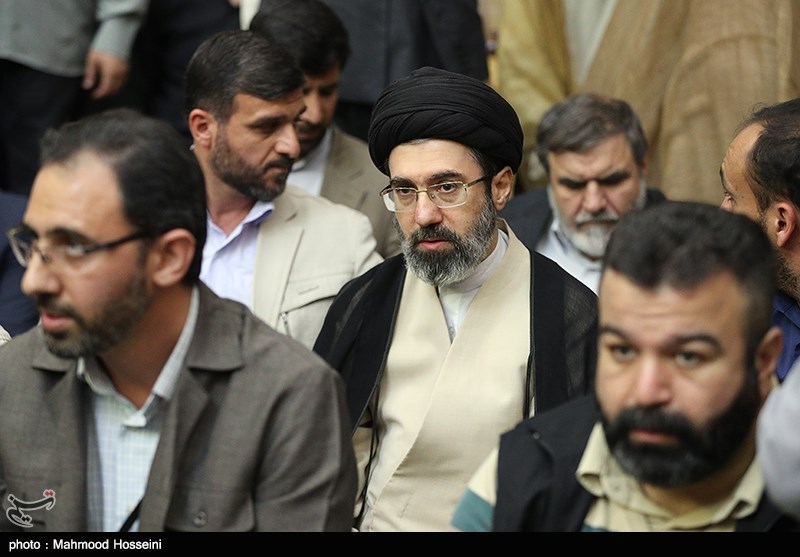
Iran on Monday named Mojtaba Khamenei as the new supreme leader, succeeding his father Ali Khamenei, signalling the continued dominance of hardline leadership as the week-long conflict involving the United States, Israel, and Iran pushed global oil prices above $100 per barrel.
Mojtaba, a cleric known for his influence within Iran’s security establishment and extensive business networks linked to his father, had long been considered a leading candidate ahead of the vote by the Assembly of Experts. The 88-member clerical body is responsible for selecting the country’s supreme leader.
In a statement issued shortly after midnight in Tehran, the Assembly said it had decisively appointed Ayatollah Seyyed Mojtaba Hosseini Khamenei as the third leader of the Islamic Republic. The role grants him ultimate authority over all state affairs.
His appointment is expected to raise tensions with Donald Trump, the U.S. president, who earlier said Washington should have a say in the selection. Meanwhile, Israel had warned it could target whoever assumed the position. After the announcement, Trump declined to comment in detail, saying only that the situation would unfold. He also noted that ending the conflict would require agreement with Israeli Prime Minister Benjamin Netanyahu.
Ali Khamenei was killed in one of the first strikes launched against Iran more than a week ago, intensifying the conflict across the region.
Oil prices surge
The widening war has disrupted energy markets, sending oil prices sharply higher and rattling global financial markets. Concerns about supply disruptions—particularly shipments passing through the Strait of Hormuz—pushed crude prices to their highest levels since 2022. Benchmark Brent crude rose above $108 a barrel after a sharp jump the previous week.
The spike in oil prices also weighed on equity markets. Futures tied to the S&P 500 and the Nasdaq Composite fell, whilst the U.S. dollar strengthened against major currencies.
Regional tensions escalate
Iranian state media reported that the leadership of the armed forces had pledged loyalty to Mojtaba Khamenei, whilst the Islamic Revolutionary Guard Corps said it stood ready to follow the new supreme leader.
The Assembly of Experts convened despite warnings that it could be targeted during the conflict. Iranian security officials said the country needed unified leadership during the current crisis.
Iran has responded to U.S. and Israeli strikes with attacks across the region. Heightened security risks have prompted Washington to order non-essential diplomatic staff and their families to leave several countries in the Gulf, including Saudi Arabia. The U.S. has also reduced personnel at embassies in Qatar, Kuwait, Jordan, and Bahrain.
Saudi authorities earlier reported intercepting a drone targeting the diplomatic quarter in Riyadh, an area that houses many foreign missions including the U.S. embassy.
Meanwhile, Israel continued to target senior Iranian figures. Among those reportedly killed was Abolqasem Babaian, recently appointed head of the supreme leader’s military office.
Conflict enters dangerous phase
As fighting intensified, large plumes of smoke were seen rising over Tehran following strikes on oil storage facilities. Iranian officials described the attacks as a dangerous escalation of the conflict and accused Israel of committing war crimes.
Israeli military officials said the targeted facilities were being used to support Iran’s war operations, including the production or storage of propellant for ballistic missiles, making them legitimate military targets.
Netanyahu said Israel would continue its campaign against Iran’s leadership, stating that the government had a broader strategy aimed at destabilising the current regime and enabling political change.
Click here for more on World News