
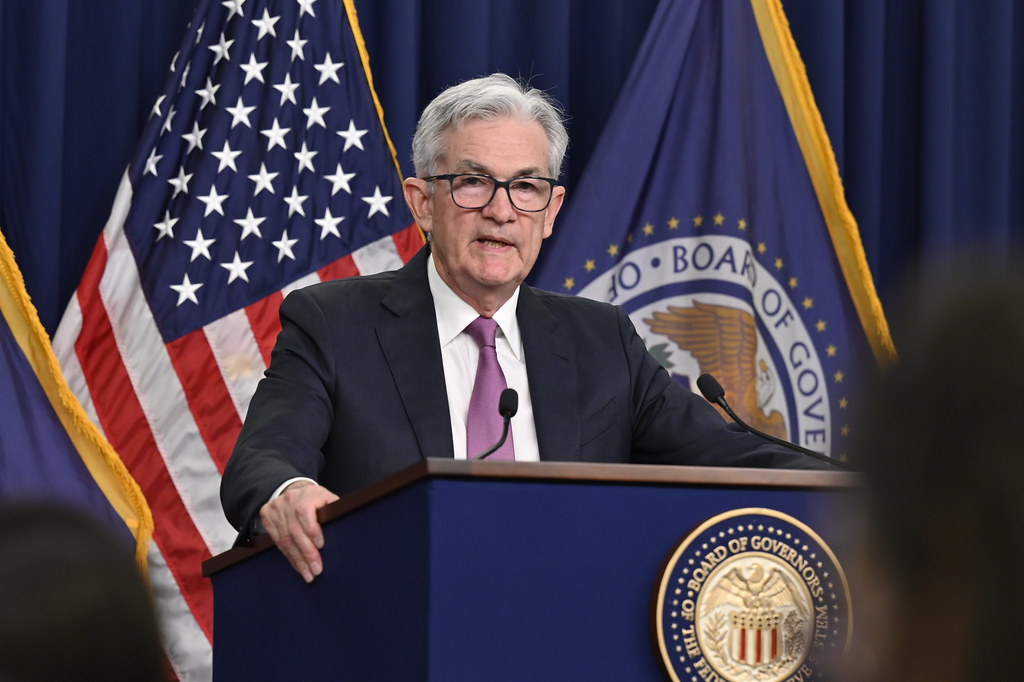
The Trump administration has threatened criminal charges against Federal Reserve Chair Jerome Powell over his congressional testimony last summer regarding a Fed building renovation, a move Powell said was a pretext to exert greater control over the central bank and its monetary policy.
The escalation in President Donald Trump’s long-running campaign to influence the Fed drew swift reaction. Republican Senator Thom Tillis, a member of the Senate Banking Committee, said the threat raised serious questions about the Justice Department’s “independence and credibility.” Tillis said he would oppose all Trump nominees to the Fed—including the president’s forthcoming choice of a new chair—until the matter is resolved.
Powell disclosed on Sunday night that the Justice Department had issued grand jury subpoenas tied to his testimony before the Senate Banking Committee last June. While stressing his respect for the rule of law, Powell said the action must be viewed in the context of sustained political pressure on the Fed to cut interest rates.
He said the threatened indictment was not about congressional oversight or the renovation project, but rather a response to the Fed setting policy based on its assessment of the public interest rather than presidential preferences.
Trump told NBC News he was unaware of the Justice Department’s actions, while criticising Powell’s performance as Fed chair. A Justice Department spokesperson declined to comment on the case, saying only that prosecutors had been instructed to prioritise investigations involving potential misuse of taxpayer funds.
Trump has repeatedly pushed for aggressive rate cuts since returning to office in January, blaming the Fed for restraining economic growth and floating the idea of removing Powell despite legal safeguards protecting the Fed’s independence. He is also seeking to dismiss Fed Governor Lisa Cook, a case now before the Supreme Court.
Economists view central bank independence as a cornerstone of sound economic policy, insulating rate decisions from political pressure. Peter Conti-Brown, a Fed historian at the University of Pennsylvania, called the inquiry into Powell a “low point” for both the Trump presidency and US central banking, arguing that Congress deliberately designed the Fed to operate independently of presidential influence.
Financial markets showed limited reaction. Rate futures continued to price in two cuts this year, while the dollar and US equity futures dipped modestly.
The subpoenas mark a significant shift in the strained relationship between Trump and Powell. Although Trump appointed Powell during his first term, he soon became openly critical. Powell, who has typically avoided responding publicly to political attacks, directly accused the administration of using legal pressure to push for faster and deeper rate cuts.
While Powell’s term as chair ends in May, he can remain on the Fed’s board until January 2028, limiting Trump’s ability to make additional appointments. The administration began criticising the Fed’s $2.5 billion Washington renovation last year, calling it excessive—an argument some analysts viewed as a justification for broader pressure on the central bank.
Powell has defended the project as necessary modernisation, providing detailed explanations publicly and to administration officials. During his regular congressional testimony in June, he again addressed the issue, and in July Trump visited the site, where Powell personally guided him through the renovations.
Click here for more on World