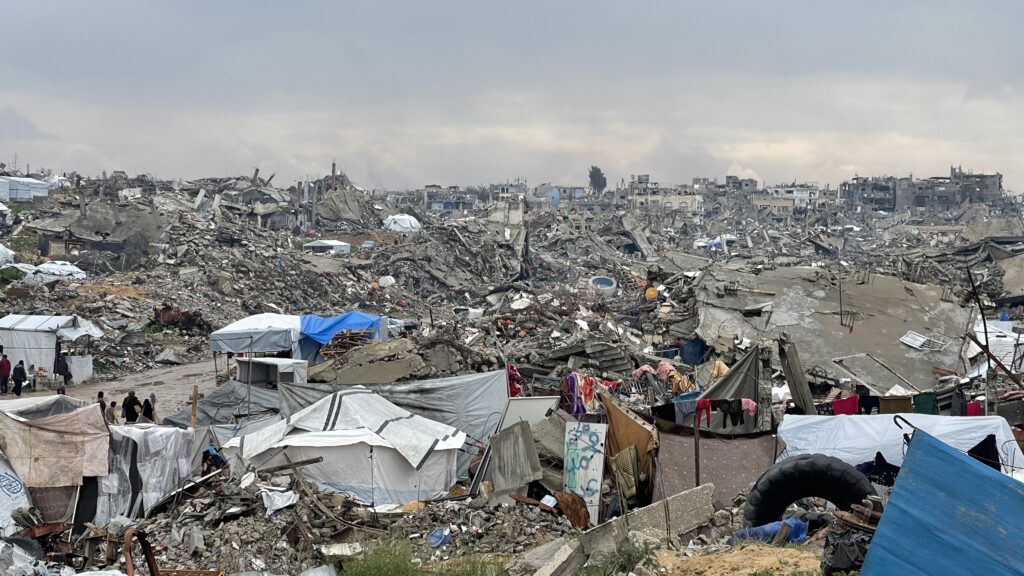
The United Nations has delivered one of its most alarming assessments of Gaza, stating that the level of destruction is so vast that full recovery may take several decades, possibly as long as thirty years. UN analysts estimate that many tens of thousands of buildings have been damaged or completely destroyed, and that more than half of all homes in the territory are no longer habitable. In some urban districts, satellite surveys show destruction rates reaching seventy percent or more, leaving entire neighborhoods erased.
Technical teams working with the UN report that essential water and sewage networks serving a population of more than two million people are operating at extremely limited capacity. Electricity supply, which was already fragile, now functions for only a few hours in some areas and not at all in others. Humanitarian agencies say that more than one million displaced residents are living in crowded shelters or improvised camps, often with fewer than three liters of clean water per person per day, which falls far below international humanitarian standards.
Hospitals, which once counted thirty six functioning facilities, have been reduced to only a few partially operating centers. Many of these facilities are handling patient numbers that are three or four times greater than their intended capacity. Medical workers describe conditions that resemble continuous disaster response rather than regular hospital care.
UN planners caution that even if reconstruction efforts were allowed to begin immediately, restoring water systems, power lines, sanitation networks, roads, and other core infrastructure would require at least ten to fifteen years. A full rebuilding of homes, commercial areas, public institutions, and civic structures is expected to take twenty to thirty years. These timelines depend on uninterrupted access to materials, funding, and technical assistance, conditions that have rarely been present in Gaza.
The United Nations is urging the creation of an international reconstruction framework with long term commitments from multiple states and institutions. Without sustained funding, coordinated planning, and reliable humanitarian access, officials warn that Gaza may be trapped in a prolonged cycle in which rising needs outpace the slow pace of recovery. The UN cautions that without a global response at scale, the numbers now defining Gaza’s destruction may become a permanent reflection of a crisis that the world did not act fast enough to address.
Click here for more on World