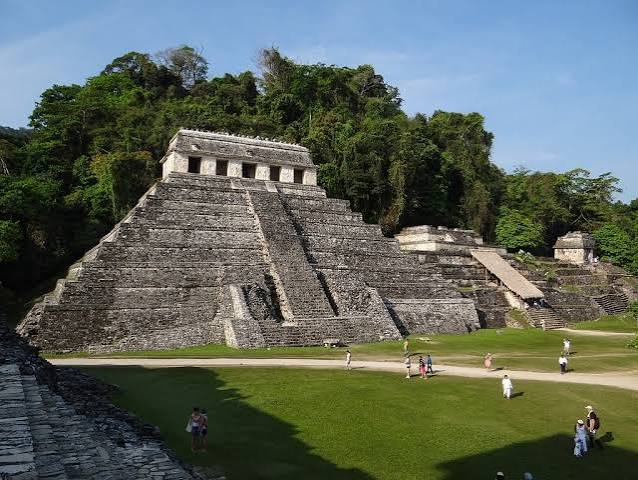
For the ancient Maya civilisation, the bright red mineral cinnabar carried profound spiritual significance, symbolising blood, life and the soul. It was extensively used as a pigment in temple decorations and murals, as well as in religious ceremonies and burial rituals. However, the Maya were unaware that cinnabar consists primarily of mercury, a substance known for its toxicity.
Earlier studies had established that mercury from cinnabar caused long-lasting contamination at several ancient Maya settlements, including Tikal in Guatemala. New research now suggests that the pollution was far more extensive than previously understood, revealing that mercury seeped into surrounding soil and water systems, causing severe harm to aquatic ecosystems. Researchers reached these conclusions after analysing sediment core samples collected beneath lakes near two ancient Maya cities on Mexico’s Yucatan peninsula: the well-documented archaeological site of Coba and the relatively unexplored settlement of Xcach.
At Coba, researchers identified a sharp increase in mercury levels beginning around 250 AD, with contamination continuing for approximately 150 years during the early stages of the Maya civilisation’s Classic Period. At Xcach, mercury concentrations rose between approximately 125 AD and 200 AD, followed by another increase around the same period recorded at Coba. A third contamination episode occurred between roughly 535 AD and 820 AD, extending towards the end of the Classic Period.
The findings provide new evidence of mercury pollution across the northern Maya lowlands, an area where historical records of contamination have previously been limited. They also reveal some of the highest mercury concentrations documented at ancient Maya sites.
The Classic Period ended with the decline and abandonment of several major Maya cities. Researchers have previously explored various explanations for this collapse, including climate change and warfare. The latest study raises the possibility that mercury exposure may have contributed to the environmental pressures affecting these settlements.
Lead researcher Matt Waters, a professor of environmental science at Auburn University in Alabama, said the findings revealed mercury contamination levels that exceeded modern toxicology and pollution standards at their most severe, with elevated concentrations persisting around Coba and Xcach for centuries.
The research also examined biological indicators preserved in lake sediments, including bacteria, algae, cyanobacteria, shelled organisms and insect midges. Several of these organisms declined significantly or disappeared altogether, suggesting that mercury contamination had spread across multiple levels of the aquatic food chain, Waters explained.
Mercury exposure can cause serious damage to the human central nervous system, brain, kidneys, lungs and heart.
Study co-author Savanna Wooten, a postdoctoral researcher at the Jones Center at Ichauway in Georgia, said the movement of mercury through the food chain raises the possibility that Maya communities were exposed to the toxic substance through contaminated drinking water or fish consumption.
However, Wooten cautioned that the research does not directly establish a connection between mercury poisoning and the collapse of Classic-era Maya cities. Instead, it adds another potential environmental and climatic stress factor to the growing body of evidence surrounding the civilisation’s decline.
Coba, pronounced “koh-BAH”, is believed to have supported a population of between 60,000 and 90,000 people during the Classic Period. Today, it is a prominent archaeological destination surrounded by jungle and features one of the tallest ancient pyramids on the Yucatan peninsula.
Much less is known about Xcach, pronounced “SCOTCH”, which is situated on privately owned land and contains several pyramids and other structures. Limited archaeological investigations have been conducted at the site.
Researchers noted that cinnabar, a naturally occurring mercury sulphide mineral, may have been an important trading commodity in settlements such as Coba and Xcach, where natural deposits of the mineral were not abundant.
The ancient Maya established one of the most influential civilisations in the pre-Columbian Americas, spanning territories across present-day Mexico, Guatemala, Belize, Honduras and El Salvador. Their achievements included monumental architecture, remarkable artistic works, advanced astronomical and mathematical knowledge, sophisticated calendar systems and an elaborate writing system.
Waters noted that the Maya civilisation’s longevity and accomplishments in science, architecture and art reflected an extraordinary cultural legacy, with cinnabar serving as an important pigment that contributed to the visual richness of their society.
Click here for more on Lifestyle