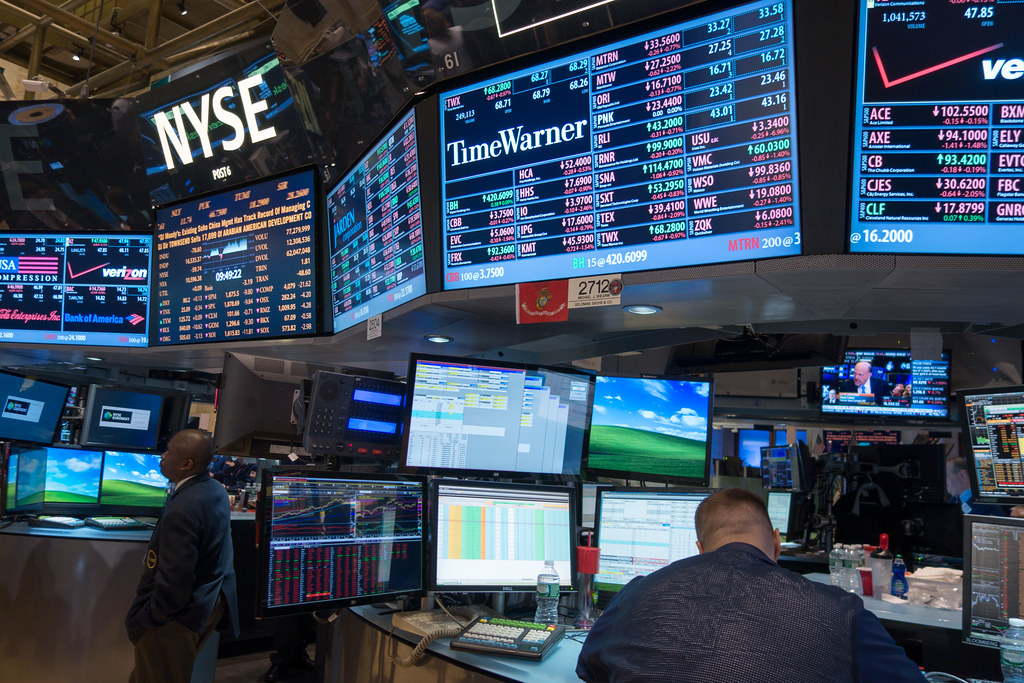
The recent dip in U.S. stocks has interrupted a rally that had repeatedly pushed markets to record highs, but many investors see it as a temporary pause rather than a sign of deeper trouble.
The S&P 500 has declined 2.4% over the past eight sessions as investors grew cautious about the U.S. economic outlook and lofty valuations in technology and artificial intelligence stocks — the main drivers of this year’s gains. “It’s a speed bump, not a wall,” said Raheel Siddiqui, senior investment strategist at Neuberger Berman. “I don’t think the conditions exist for a recession, bear market, or anything more severe.”
Despite concerns over valuations and market concentration, investors say several factors continue to support the bull market — including looser financial conditions from the Federal Reserve, rising capital spending driven by AI, and a broadly resilient economy. “I don’t see a major shift in investor positioning or sentiment yet,” said Chris Dyer, co-head of Eaton Vance Equity.
Part of the reason the pullback stands out, analysts noted, is that market declines have been relatively rare since the tariff-related selloff in April. The S&P 500 has not fallen more than 3% from its latest peak since then. “This is just a reminder that volatility is normal,” said Mike Reynolds, vice president of investment strategy at Glenmede Wealth Management.
Many investors view the move as a bout of profit-taking rather than the start of a downturn. “There’s some fear of heights, but no significant unwinding,” said Tobias Hekster, co-chief investment officer at True Partner Capital. The greater risk, others argue, is overreacting to the weakness. “The worst thing investors could do right now is pull money out,” said David Wagner, head of equities at Aptus Capital Advisors.
While short-term volatility may continue, the broader outlook remains positive, said Phil Orlando, chief market strategist at Federated Hermes. “We could see some choppiness over the next couple of quarters, but that would be a buying opportunity,” he said.
A stronger U.S. economy is also helping to steady confidence. Revised data showed faster second-quarter growth, fueled by robust consumer spending. Business investment is expected to remain strong enough to offset weaker consumption and trade, according to a National Association for Business Economics survey. “Global fundamentals remain solid — both in the U.S. and emerging markets,” said Victor Zhang, chief investment officer at American Century Investments.
Still, with the S&P 500 up 14% this year and the Nasdaq up 19%, analysts warn that any negative economic surprises could accelerate the selloff. The ongoing U.S. government shutdown has also disrupted access to official data, forcing investors to rely on unofficial reports — and increasing the risk of overreaction.
“Bull markets don’t die of old age; they die of fright,” said Sam Stovall, chief investment strategist at CFRA. “Right now, what the market fears most is a recession.”
Click here for more on Finance and Investing