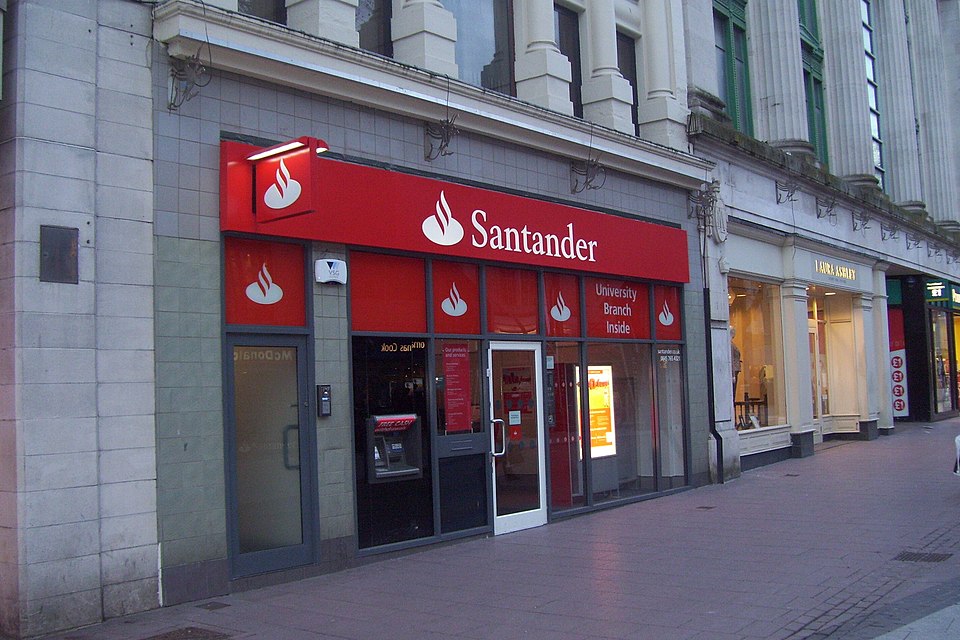
Spain’s Banco Santander has agreed to acquire U.S. regional lender Webster Financial in a $12.2 billion transaction, a move that would create one of the ten largest retail and commercial banks in the United States and reinforce the group’s strategic focus on the American market.
While several European banks have reduced their U.S. presence in recent years, Santander, led by Executive Chair Ana Botín, has prioritised expansion in the country. The deal would elevate Santander into the top 10 U.S. retail and commercial banks by assets, with a combined American balance sheet of about $327 billion. Following the announcement, Santander’s U.S.-listed shares fell 6.4% to $12.23.
Santander entered the U.S. market in 2005 through the acquisition of Sovereign Bank and has since built a strong position, particularly in auto lending. The transaction comes amid expectations that regulatory approvals for bank mergers may become more favourable under President Donald Trump’s administration. According to LSEG, the acquisition would be the largest banking deal since October 2025, when Fifth Third Bank agreed to acquire Comerica Inc for $10.8 billion and HSBC launched a $13.6 billion bid for Hang Seng Bank.
In 2023, Santander also expanded its U.S. corporate and investment banking operations by hiring more than 100 employees from the collapsed Credit Suisse. Botín said acquiring Connecticut-based Webster Financial would help improve scale, profitability, and funding costs. Santander is offering 2.0548 of its shares plus $48.75 in cash for each Webster share, adding that it has no plans to raise its bid.
The transaction is expected to close in the second half of 2026, and Santander indicated it does not intend to pursue additional acquisitions over the next three years. The bank expects the deal to help deliver a return on tangible equity of around 18% in the U.S. by 2028, placing it amongst the five most profitable institutions within the 25 largest U.S. commercial banks, with a group-level target of exceeding 20% by 2028.
Santander also reaffirmed its shareholder return commitments, including a €5 billion share buyback announced Tuesday and plans to distribute at least €10 billion to shareholders based on 2025 and 2026 results, while maintaining a 50% payout ratio. The bank expects its CET1 ratio to stand at 12.8% after the deal closes and exceed 13% by 2027.
The merger is projected to generate about $800 million in cost synergies, representing roughly 19% of the combined cost base. Santander was advised by Centerview Partners, Goldman Sachs, and Bank of America.
Separately, Santander reported a record net profit of €14.1 billion for 2025, a 12% increase from the previous year and above analyst forecasts of €13.77 billion. Its return on tangible equity rose to 16.3%, slightly below its target of around 16.5% for end-2025.
The bank expects net profit in 2026—excluding the sale of its Polish operations, the TSB unit in the UK, and the Webster acquisition—to continue growing beyond 2025 levels, with profit projected to rise 14% to 16% by 2027 in constant euros.
In the fourth quarter, Santander’s net profit climbed 15% year-on-year to a record €3.76 billion, surpassing analyst expectations of €3.44 billion. However, lending income for 2025 declined 2.8% to €45.35 billion, slightly above analyst forecasts of €45.2 billion.
Click here for more on Finance and Investing