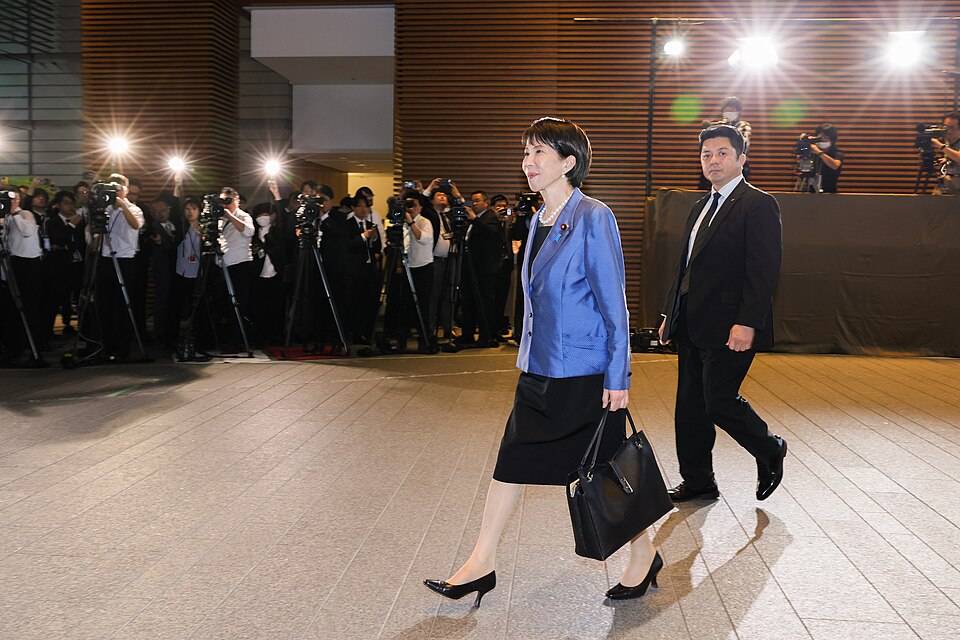
Japanese Prime Minister Sanae Takaichi said on Monday that her government will draft a new multi-year fiscal target to allow greater flexibility in spending, effectively softening Japan’s long-standing commitment to fiscal discipline.
Takaichi also said she would not rule out the possibility of cutting Japan’s sales tax in the future, reinforcing expectations that her administration will focus on stimulating economic growth rather than curbing the country’s mounting debt. Her comments mark a clear shift from previous governments that prioritized annual fiscal targets and the need to maintain investor confidence, even while rolling out large stimulus measures.
“We will make sure to maintain market trust in Japan’s fiscal sustainability. But without stronger investment, the economy cannot grow,” Takaichi told parliament.
The government’s emphasis on expansionary policy may complicate the Bank of Japan’s decision on when to resume its rate hikes, which were paused due to uncertainty over the impact of higher U.S. tariffs. In a draft of its new economic plan seen by Reuters, the government said monetary policy should support robust growth and price stability, urging the BOJ to align with its demand-boosting efforts.
The BOJ left rates unchanged last month, though a summary of opinions released Monday showed growing support among board members for raising rates soon. The central bank’s next policy meeting is set for December 18–19, around the time the government finalizes its fiscal 2025 budget.
“I don’t think the BOJ will raise rates in December, as the meeting takes place before the cabinet approves next year’s budget,” said Toru Suehiro, chief economist at Daiwa Securities.
Since taking office last month, Takaichi has pledged to introduce measures to offset the impact of rising living costs and boost investment in key areas such as growth industries and defense. Analysts, however, warn that her spending plans could undermine Japan’s existing goal—set in June—to achieve a primary budget surplus between fiscal 2025 and 2026.
Takaichi said last week that she intends to replace the current annual primary budget balance target with a more flexible, multi-year framework. While she stopped short of scrapping the existing goal immediately, she said on Monday that she would instruct her cabinet in January to start designing the new fiscal target.
“From now on, I’d like to explore new approaches to evaluate the budget balance over a multi-year horizon,” she told parliament.
The primary budget balance, which excludes debt servicing and new bond issuance, measures how much government spending can be financed without borrowing.
Japan has repeatedly delayed its goal of achieving a primary surplus as successive governments relied on heavy spending to revive growth and cushion shocks such as the pandemic. Takaichi has criticized the metric as outdated and inconsistent with international standards, arguing that it restricts Japan’s ability to use fiscal tools effectively.
Japan’s public debt—at roughly twice the size of its economy—is the highest among major economies. Economists warn that as the BOJ moves toward tightening and scales back its bond purchases, the cost of servicing this massive debt burden could rise sharply.
Click here for more on Finance and Investing