The world economy has shown greater resilience than anticipated despite numerous shocks, leading the International Monetary Fund (IMF) to forecast only a slight slowing of global growth for this year and 2026.
Key Takeaways from the IMF’s Outlook
-
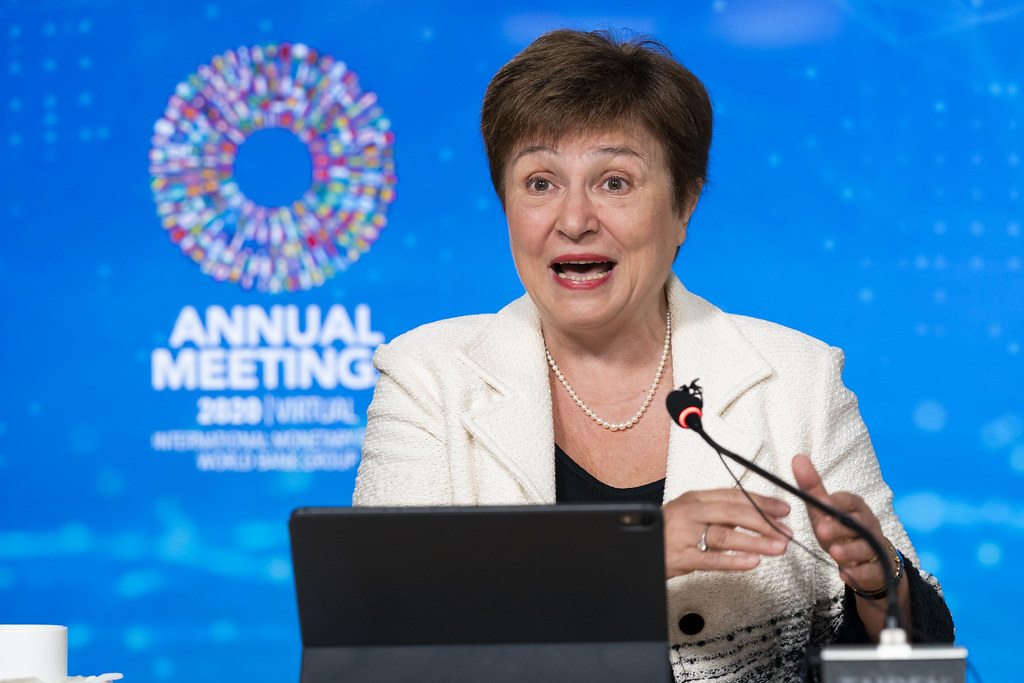
Better Than Feared: IMF Managing Director Kristalina Georgieva noted that the global economy has “generally withstood acute strains,” citing factors like better policy-making, an adaptable private sector, less severe tariffs than initially feared, and supportive financial conditions. Specifically, the U.S. economy has dodged a feared recession.
-
Revised Growth Forecasts: The IMF had previously raised its global growth forecast for 2025 to 3.0% and 2026 to 3.1% in July, and will release a fresh outlook soon.
-
Worse Than Needed: Despite the short-term resilience, Georgieva warned that the world economy is doing “worse than needed.” The IMF forecasts medium-term global growth to settle around 3%, which is significantly below the 3.7% rate seen before the COVID-19 pandemic.
-
Rising Risks and Uncertainty: The global economy faces high and climbing uncertainty, with the IMF chief telling people to “Buckle up… Uncertainty is the new normal.” Evidence of this risk-aversion is the surge in demand for gold, which now makes up over 20% of the world’s official reserves.
-
Tariff and Valuation Warnings:
-
Tariffs: While the initial U.S. tariff shock was less severe than feared—with the average U.S. trade-weighted tariff rate dropping to 17.5%—the volatility of these rates and the potential for companies to pass on costs could still lead to higher U.S. inflation.
-
Financial Markets: Georgieva cautioned that financial market valuations are approaching the levels seen just before the dot-com crash of March 2000, and an abrupt shift in sentiment could severely hurt global growth, particularly for developing countries.
-
-
Call for Reform and Fiscal Prudence: The IMF urged countries to boost growth by increasing private-sector productivity, consolidating government spending, and addressing imbalances. A key concern is the level of global public debt, which is expected to exceed 100% of GDP by 2029.
-
Specific Recommendations: Georgieva called on the U.S. to take “sustained action” to reduce its federal debt; advised China to clean up its property sector and boost social safety nets; and urged Asia to deepen regional trade integration.