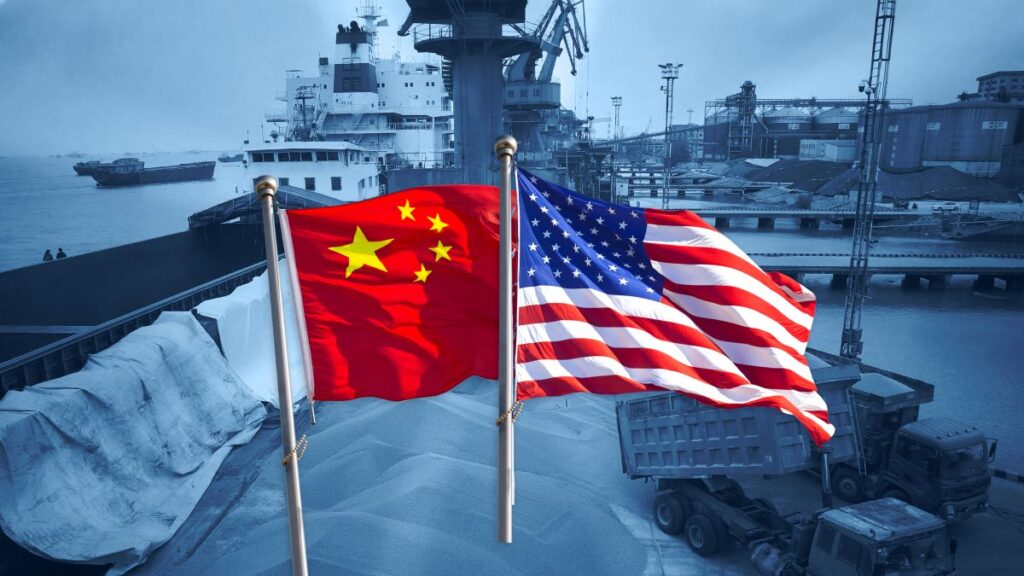
China’s Premier Li Qiang on Tuesday called on global trading partners to push back against growing protectionism, a day after China reported a record $1 trillion trade surplus fueled by strong export growth to non-U.S. markets.
Beijing is now facing widening tensions with major economies beyond the United States, many of which are urging China to reform its $19 trillion economy and reduce its heavy reliance on exports. Speaking to leaders of the IMF, World Bank, WTO and other international bodies, Li pressed for stronger global governance as more countries—including China—turn to tariffs and other import levies.
“Since the start of the year, tariff threats have cast a shadow over the global economy, with trade restrictions spreading and significantly hurting global activity,” Li said at the “1+10 Dialogue” in Beijing, which also included officials from the OECD and International Labour Organization.
“The mutually damaging impact of tariffs is becoming more obvious, and calls to defend free trade are growing louder,” he added.
Tariffs escalating amid China’s export reliance
Economists broadly agree that China’s large trade surplus and reluctance to shift away from its export-driven growth model are key drivers behind the global rise in tariffs. Yet they see little sign Beijing will change direction despite mounting pressure.
Li insisted that demand from China’s vast domestic market would accelerate over the next five years. But many world leaders appear increasingly frustrated. French President Emmanuel Macron said he warned Beijing of possible tariffs during his recent state visit, which coincided with the EU unveiling new measures to shield Europe from risks such as rare earth shortages and underpriced imports.
Analysts argue that while former U.S. President Donald Trump’s tariff hikes significantly shook global trade, China’s slow pace of reform leaves Western economies with limited choices.
“China is not taking any action, nor does it intend to,” said Alicia Garcia-Herrero of Bruegel. “I don’t see China being concerned about these visiting officials at all.”
She noted that China’s export-led model is set to contribute about 40% of global growth in 2025—an unusually high level given China’s own growth trajectory.
Export diversification accelerates
China’s latest trade data shows its efforts to shift exports away from the U.S. following Trump’s 2024 election win are paying off, with strong growth in shipments to Europe, Australia and Southeast Asia.
“U.S. tariffs have redirected Chinese exports to other markets, intensifying competition globally,” said Fred Neumann, chief Asia-Pacific economist at HSBC. “This shows that tariffs distort trade flows but fail to solve deeper macroeconomic imbalances.”
Click here for more on Finance and Investing