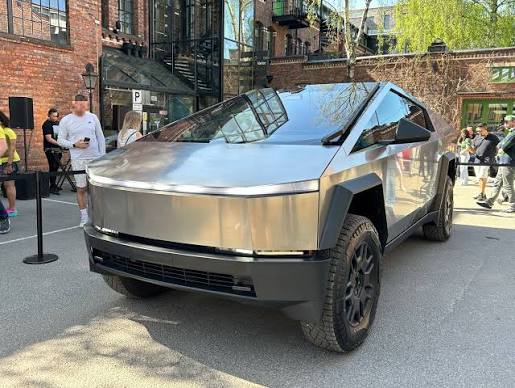
Tesla plans to gradually halt Cybertruck production at its Texas Gigafactory around mid-2027, Chief Executive Elon Musk announced on Friday, following years of disappointing sales for the futuristic electric pickup that was initially positioned as a competitor to traditional truck manufacturers.
Musk said in a post on X that the production phase-out would free up capacity for increased manufacturing of the newly launched Cybercab, a vehicle central to Tesla’s ambitions to establish a global robotaxi network.
The announcement follows a difficult week for Musk, whose political spending of nearly US$500 million delivered limited returns in the US midterm elections, with most of the Republican candidates he supported losing their contests. The market value of his companies was also on track to decline by more than US$370 billion over the week.
It remains unclear whether Cybertruck manufacturing will be transferred to another facility or discontinued entirely. Tesla’s Austin factory is currently the only known site equipped to produce the specialised components required for the vehicle.
Responding to a user on X, Musk described the Cybertruck as Tesla’s best vehicle and characterised the production wind-down as the end of an era. The company had not immediately commented on the announcement.
Tesla began delivering the Cybertruck in late 2023, but sales have fallen significantly short of initial expectations. According to Kelley Blue Book, the automaker sold just 20,237 units in the US last year, down 48% from 38,965 in 2024. Before production began in 2023, Musk had projected annual sales of 250,000 vehicles.
Former Aston Martin Chief Executive Andy Palmer said continuing production would be difficult to justify given the model’s failure to meet sales targets. He added that the Cybertruck’s limited commercial performance was evident despite its relatively small contribution to Tesla’s overall financial position.
Musk’s SpaceX was among the vehicle’s largest customers in 2025, purchasing Cybertrucks worth US$131 million at list prices, according to its initial public offering filing.
Cybertruck struggles to gain market acceptance
Since its unveiling in 2019, the Cybertruck has attracted considerable controversy over its unconventional angular design. Traditional pickup enthusiasts criticised its appearance, while safety specialists raised concerns about whether its structure would meet regulatory requirements in major markets, particularly Europe.
The vehicle’s launch presentation also faced difficulties when Musk attempted to demonstrate the strength of its supposedly shatterproof windows by having metal balls thrown at them. The demonstration resulted in visible cracks in two windows.
At its official launch in 2023, Musk presented the Cybertruck as a futuristic alternative to pickup models from General Motors and Ford, describing it as a vehicle that would redefine the appearance of future automobiles.
However, the model has struggled commercially and faced several quality and safety-related challenges. Tesla has issued 11 recalls since the Cybertruck entered the market, according to the US National Highway Traffic Safety Administration. Some required physical repairs, while others were addressed through software updates delivered remotely.
Automotive analyst Felipe Munoz said the Cybertruck’s disappointing sales should also be viewed within the wider challenges facing electric pickup manufacturers in the US, where similar models from Ford and other automakers have struggled to attract buyers.
The Cybertruck’s distinctive stainless-steel exterior and sharp-edged structure have also restricted its prospects in markets such as Europe, where electric vehicle adoption is stronger. Its design does not meet European pedestrian-impact safety requirements, making regulatory approval difficult.
Palmer said the vehicle would not be suitable for markets with crash regulations that specifically account for pedestrian safety.
Tesla shifts focus towards autonomous mobility
The production wind-down reflects Tesla’s growing focus on the Cybercab, a fully autonomous two-seater vehicle featuring butterfly doors and no steering wheel, pedals or conventional mirrors.
Musk sees the Cybercab as a central component of Tesla’s transformation from a traditional electric vehicle manufacturer into an artificial intelligence and robotics company. The vehicle is intended to operate within a global network of autonomous taxis.
After several delays to its self-driving ambitions, Tesla began offering paid rides using a limited fleet of Cybercabs in Austin in September. However, the company is still facing regulatory scrutiny over whether the vehicle has been properly certified under US federal motor vehicle safety standards.
The National Highway Traffic Safety Administration opened an audit in September to examine the basis of Tesla’s self-certification and has requested further information from the company.
Cybertruck lead engineer Wes Morrill said the model had served as an important platform for technological development, with its innovations continuing through the Cybercab programme.
However, the new robotaxi is unlikely to immediately compensate for the Cybertruck’s declining production volumes. Cybercab manufacturing began only earlier this year, and the programme remains relatively small despite Tesla listing installed production capacity of more than 125,000 units.
According to Texas Department of Motor Vehicles data, approximately 570 of the more than 1,200 Tesla robotaxis operating in the state are Cybercabs, while the remainder consist mainly of Model Y vehicles.
Click here for more on Technology