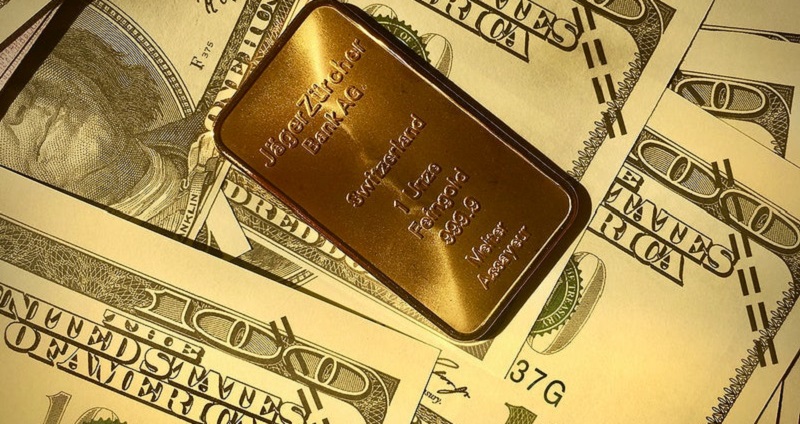
Gold values fell over 3%, dropping past the significant psychological threshold of $4,000 per ounce, as the commodity faced headwinds from a strengthening U.S. dollar and escalating forecasts for interest rate increases. Spot gold retreated 3.4% to arrive at $3,968.41 per ounce, marking its lowest value since November 2025, while U.S. gold futures experienced a sharper decline of nearly 4% to settle at $3,984.40. This downward trajectory was amplified by a rising greenback, which effectively raises the acquisition cost of dollar-denominated bullion for international buyers holding alternative currencies.
Market participants have aggressively adjusted their projections toward near-term monetary tightening following hawkish rhetoric from the Federal Reserve, alongside lingering concerns over wartime inflation linked to the conflict involving Iran. Independent metals trader Tai Wong noted that the combined force of a potential interest rate hike as early as September, a dollar trading at 13-month highs, and cooling inflation expectations are weighing heavily on the precious metals sector. He added that while robust central bank buying and a technical support floor near $3,900 should prevent an outright collapse, the asset class faces a prolonged phase of price consolidation as investor enthusiasm cools. Because gold is a non-yielding asset, its investment appeal typically diminishes in higher-rate environments.
The current correction is part of a broader descent from late January, when spot gold established a historic record high of $5,594.82 per ounce, meaning the metal has since shed more than $1,600 in value. In response to this shifting market landscape, commodity analysts at ING downgraded their near-term price targets, lowering their third-quarter 2026 projections to an average of $4,300 per ounce and their fourth-quarter outlook to $4,600, down from prior estimates of $4,850 and $5,000 respectively.
Market attention is now turning to the upcoming release of the U.S. Personal Consumption Expenditures (PCE) price index, which serves as the Federal Reserve’s primary metric for tracking core inflation. Analysts at FXTM cautioned that any economic indicators or central bank commentary validating a tighter monetary policy stance could introduce additional downward pressure on the metal. This negative sentiment rippled across the broader precious metals complex, with spot silver sliding 6% to a multi-month low of $58.28 per ounce, while platinum and palladium dropped 4.3% and 4.9% to settle at $1,580.76 and $1,177.50 respectively.
Click here for more on Finance and Investing