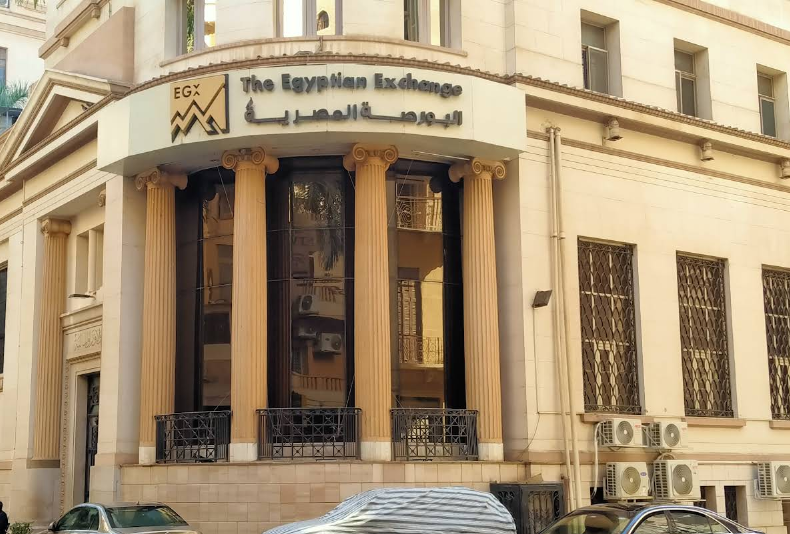
Egypt faces a potential downgrade from emerging market to frontier market status. While fund managers warn this could damage investor sentiment and alter market behavior, they note that the immediate capital outflow may be restricted.
S&P Dow Jones Indices (S&P DJI) is currently conducting a consultation on the reclassification, with a decision scheduled for July 17 and potential implementation in September 2027. Concurrently, although Egypt maintained its FTSE Secondary Emerging market status in a recent review, it remains on a watchlist ahead of FTSE’s June 30, 2026 assessment because the Egyptian Exchange (EGX) no longer holds the minimum required number of eligible investable equities. According to both S&P DJI and FTSE Russell, Egypt’s investability score is being heavily dragged down by past periods of restricted foreign currency access, capital repatriation delays, and ongoing operational hurdles for international investors attempting to enter or exit positions.
Furthermore, institutional participation and risk management on the EGX are hampered by low liquidity, a heavy concentration of trading in just a handful of stocks, and a lack of sophisticated hedging tools like short selling and active market makers. Consequently, Egypt has struggled to satisfy qualitative emerging market benchmarks despite meeting basic quantitative size requirements.
Randa Hamed, managing director at Okaz Asset Management, viewed the warnings from index providers as a serious wake-up call. However, she emphasized that the impact of forced selling by passive index-tracking funds would be limited because Egypt’s current weight in major emerging market benchmarks is already negligible—sitting at roughly 10 basis points (0.1%) in both the S&P and MSCI Emerging Market indices. In the MSCI EM Index, Egypt is one of the smallest components, represented by only three large and mid-cap stocks: Commercial International Bank (CIB), Talaat Moustafa Group (TMG), and Eastern Company. For comparison, Saudi Arabia is the region’s heaviest weight at 3.8%, followed by the UAE at 1.4%.
Tarek Shahin, managing director and CIO at CI Capital Asset Management, agreed that the market impact would be primarily psychological and is likely already priced in, pointing out that foreign investors own only a minority share of the EGX.
Excluding block trades, foreign investors were net sellers of Egyptian equities to the tune of EGP 8.15 billion in the first quarter of 2026. During this period, international investors made up 10.3% of the total trading value in listed stocks, while Arab investors accounted for 5.1%. While both groups were net sellers of equities across 2025 and early 2026, they remained net buyers of Egyptian government debt instruments, demonstrating a highly selective investment approach.
The more substantial threat stems from how discretionary active fund managers might react. Hamed pointed out that some emerging market funds are legally barred from holding frontier market assets, while others may choose to voluntarily reduce their exposure. This could result in a loss of foreign capital that would be highly difficult to reclaim, even if domestic institutional demand provides a partial buffer.
On the positive side, Hamed noted that if Egypt is downgraded, it would transition from being a negligible player in the emerging market index to a dominant force in the frontier index with an estimated weight of 3.5%, potentially drawing in dedicated frontier-market capital. Shahin agreed that this shift might not be entirely negative, despite the fact that the total pool of global emerging market capital is significantly larger than that of frontier market capital.
To stabilize and improve the market’s standing, both executives stressed that Egypt must accelerate its IPO pipeline, upgrade its trading infrastructure, and rebuild investor trust. Hamed concluded that while Egypt’s derivatives market is now operational, the lack of functioning short-selling frameworks and market-making mechanisms prevents international managers from effectively managing risk, which limits the size of the positions they are willing to build. She added that global investors are looking for consistent corporate disclosures, genuine free-float expansions, and a private sector that does not have to compete on an uneven playing field with state-owned enterprises.
Click here for more on Finance and Investing