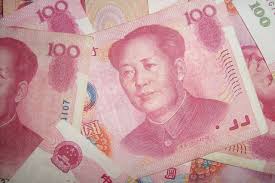
Standard Chartered said the rising role of the renminbi (RMB) in the Middle East as a strategic currency stems from a mix of pricing factors, counterparty preferences and long-term capital requirements, particularly in energy trade.
The bank said a key driver of the currency’s growing use in the region is energy transactions with China, where buyers are increasingly opting to settle deals in RMB.
Financing for infrastructure projects linked to Chinese-backed developments and contractors has also encouraged the use of RMB, alongside efforts by companies to diversify beyond the US dollar.
Trade between China and Arab countries surpassed $450 billion in 2025, with energy accounting for a large share. This strong trade relationship has fuelled rising interest in RMB settlement and financing across certain corridors.
Karen Ng, head of China Opening and RMB Internationalisation at Standard Chartered, said China represents more than 15% of global trade, yet less than 5% is settled in RMB, highlighting a structural shift that could reshape treasury strategies in the coming years.
She said demand for the currency is increasingly being driven by real-economy needs such as trade settlement, supply-chain financing and balance-sheet management, reinforcing RMB’s role in multi-currency financial frameworks.
At the same time, improvements in payment infrastructure, stronger capital-market links and deeper offshore liquidity have enabled the RMB to be used more widely for settlement, funding and investment. As a result, the focus is shifting toward how companies adapt their treasury and risk management strategies to incorporate the currency.
In the Middle East, closer financial ties have supported RMB adoption. In 2023, Saudi Arabia and China signed a local-currency swap agreement worth 50 billion yuan ($6.93 billion), signalling stronger bilateral cooperation.
The agreement also allowed domestic banks in the kingdom to provide RMB services and pilot RMB settlement in parts of the oil trade.
Meanwhile, United Arab Emirates, particularly Dubai, has gradually positioned itself as a regional hub for the currency. In addition to hosting a Chinese bank as the local RMB clearing bank, First Abu Dhabi Bank became a direct participant in the Cross-Border Interbank Payment System (CIPS) in 2025.
Standard Chartered said history shows that once a currency becomes widely integrated across trade, payments and capital markets, its international role tends to endure even amid geopolitical tensions or policy shifts. The RMB, the report noted, is beginning to reach that stage.
However, the bank added that despite the expansion of RMB infrastructure in the region, most Gulf currencies still operate within long-standing monetary frameworks tied to the US dollar, which continues to underpin reserve management, energy pricing and global capital flows.
Within this system, RMB adoption is advancing gradually in trade and treasury activities where diversification and operational efficiency make commercial sense, rather than signalling a broad shift away from the dollar.
Although the UAE and Qatar have seen relatively higher RMB use in direct trade with China and Hong Kong, the overall share of transactions settled in the currency remains small compared with total trade volumes.
Click here for more on Banking